
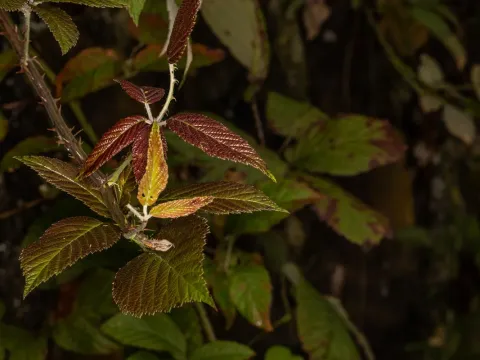
Wolfredo-Wildpret's Blackberry
Rubus wolfredoi-wildpretii
Wolfredo-Wildpret's blackberry (Rubus wolfredoi-wildpretii) is a rare botanical species belonging to the Rosaceae family. It is a strictly endemic plant found only on the island of Tenerife within the Canary Islands archipelago.
What the section contains
Wolfredo-Wildpret's Blackberry
The plant thrives in specific microclimatic conditions typical of high-altitude zones, particularly in areas influenced by laurel forests. It requires high air humidity and moderate temperature regimes to maintain its physiological functions.
Botanically, it is a prickly shrub with a robust root system adapted to volcanic soils. The leaves are characteristic of the Rubus genus, and the woody stems are evolved to withstand the strong wind conditions prevalent in its native environment.
Soil requirements focus on loose, well-draining substrates rich in organic matter and weathered volcanic rocks. In controlled environments, the plant is sensitive to pH fluctuations and requires excellent aeration to prevent root rot.
Regarding хозяйственное use, this plant is not grown as a commercial crop. Its primary value lies in its status as an ecological indicator and its importance for regional biodiversity conservation and scientific study.
The primary threats to Rubus wolfredoi-wildpretii involve habitat degradation caused by invasive species. These intruders compete for essential resources such as light and moisture, significantly reducing the available space for the blackberry.
Fungal diseases, including anthracnose and various types of leaf spot, represent major threats, especially when environmental conditions become overly humid. Proper airflow management is essential to mitigate these risks.
Insect pests, specifically aphids and mites, can cause severe damage to vegetative growth. These pests not only weaken the plant but also serve as vectors for various viral diseases that affect the Rubus genus globally.
Human activities, such as trekking and soil compaction, pose a constant danger to the fragile populations of this species. Even minor mechanical damage can lead to a decline in plant vigor and limit natural regeneration.
Successful conservation strategies require stringent protection of its endemic habitat. Ex-situ conservation in botanical gardens remains a critical measure to ensure the survival of this unique blackberry species for future generations.