
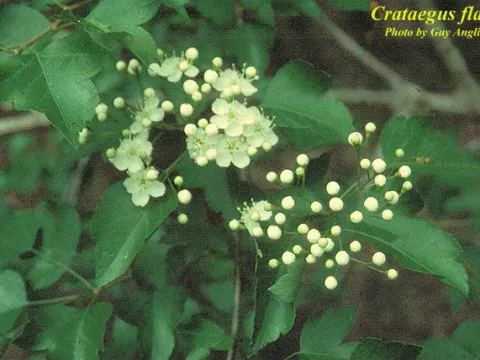
Yellow hawthorn
Crataegus flava
Yellow hawthorn (Crataegus flava) is a deciduous shrub or small tree belonging to the Rosaceae family. It is recognized for its unique yellow fruit and its utility as both an ornamental and functional plant.
What the section contains
Yellow hawthorn
Native to the southeastern United States, this species is well-adapted to varied terrains including rocky slopes, thickets, and forest edges, where it has evolved to tolerate diverse environmental conditions.
The plant thrives in full sun exposure. Adequate light is essential for the tree to maintain its density, produce vigorous growth, and ensure consistent flowering and fruit set throughout the growing season.
It prefers well-drained, fertile soil with a neutral to slightly alkaline pH. While it shows good drought tolerance once established, it cannot withstand waterlogged conditions, which can lead to root rot.
Standard agronomic management includes pruning for structural integrity, regular monitoring for soil moisture, and periodic application of organic matter to support soil fertility and plant vigor.
The yellow fruit produced by this hawthorn species is a valuable commodity. It is rich in antioxidants, vitamins, and minerals, making it suitable for both culinary applications and herbal medicinal supplements.
In culinary settings, the fruit is harvested to produce jellies, preserves, syrups, and infusions. Its distinct flavor and nutritional profile add value to health-conscious food product lines.
Beyond its edible properties, the wood of Crataegus flava is renowned for its hardness and durability. It is historically valued for crafting tool handles, canes, and ornamental woodworks.
Landscaping professionals utilize this species to create protective hedges. Its natural armament of thorns provides a robust barrier against wildlife, making it an excellent choice for perimeter planting.
Regular maintenance, including proper crown management, ensures that the plant remains productive. When cultivated in optimal conditions, it provides a reliable harvest of high-quality fruit annually.
The species is susceptible to various fungal pathogens, with powdery mildew and leaf spot being the most prevalent. These issues often arise in environments with poor air circulation and high humidity.
Rust diseases are also a significant concern, often affecting leaves and new shoots during cool, damp spring weather. Implementing a regular spray schedule with approved fungicides is recommended.
Insect pests such as aphids, scale insects, and mites can infest the foliage and stems. These pests drain sap, causing yellowing, leaf drop, and stunted development if left unchecked.
Effective management includes systematic monitoring and the use of targeted insecticides. Biological control methods, such as encouraging beneficial predatory insects, can also reduce pest populations.
- Annual pruning for airflow
- Removing fallen leaf debris
- Applying dormant oil sprays
- Monitoring for early infestation signs