
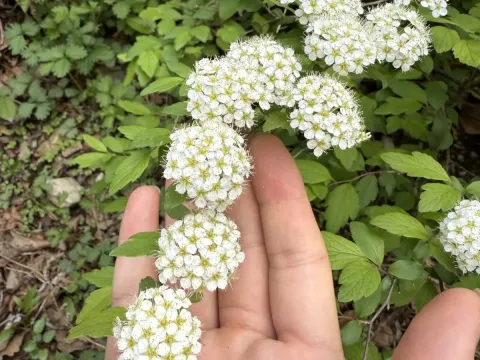
Wonsan spirea
Spiraea ouensanensis
Wonsan spirea (Spiraea ouensanensis) is a member of the Rosaceae family. This perennial deciduous shrub is highly regarded in horticulture for its elegant growth habit and attractive foliage, making it a popular choice for ornamental garden designs.
What the section contains
Wonsan spirea
Native to East Asia, specifically the Korean Peninsula, this plant has adapted to temperate climates. It thrives best in locations with abundant sunlight, though it maintains its structural integrity even in light shade throughout the growing season.
Regarding soil requirements, the species performs best in fertile, well-draining soils with a neutral pH. Proper soil moisture management is critical, as stagnant water can severely damage the root system and inhibit overall vigor.
Maintenance practices involve annual pruning to remove dead or diseased wood and to shape the shrub. Its inherent cold hardiness makes it a reliable choice for various temperate zones, requiring minimal protection during winter months.
The primary use of this species is ornamental. It is frequently incorporated into border plantings, mass displays, or as a standalone specimen in garden layouts, providing visual interest through its spring blossoms and foliage texture.
Aphids are among the most common pests that affect Wonsan spirea. These insects tend to cluster on young shoots, extracting sap and potentially causing stunted growth and leaf curling if left unmanaged.
Powdery mildew represents a frequent fungal challenge, particularly when humidity levels are high and air circulation is insufficient. The presence of white, powdery patches on leaves is a definitive sign of infection.
Spider mites may become problematic during periods of hot, dry weather. Their presence is usually signaled by fine webbing and a mottled appearance on the leaves, which can lead to premature leaf drop.
Management involves the use of systemic insecticides for aphids and targeted fungicides for fungal infections. Sustainable control often begins with maintaining healthy plants through correct spacing and irrigation.
Regular monitoring of the foliage and structural health of the shrub is essential. Early identification of issues allows for localized treatment, effectively preventing widespread damage to the specimen.