
Woodland agrimony
Agrimonia rostellata
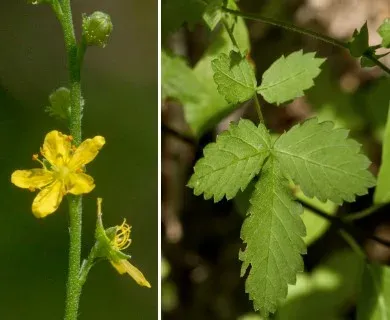
Description
Growing requirements
Woodland agrimony (Agrimonia rostellata) is a perennial herb belonging to the Rosaceae family. Its natural distribution is primarily centered in eastern North America, where it typically inhabits temperate deciduous forests and shady ravines.
The plant requires well-drained, fertile soil that maintains consistent moisture. It performs best in partial shade, mimicking its natural woodland habitat, and does not tolerate prolonged exposure to intense, direct afternoon sunlight.
Cultivation requires careful management of soil chemistry, aiming for near-neutral pH levels. Good drainage is essential, as the roots are sensitive to waterlogging, which can lead to rapid decay during the dormant season.
Agronomic practices focus on maintaining soil structure and avoiding compaction. Since the plant is primarily harvested for its medicinal properties, fertilizers must be used cautiously to preserve the chemical composition of the leaves and stems.
Economically, woodland agrimony is valued for its potential in pharmaceutical and herbal supplement industries. The extracts are studied for their potential astringent, anti-inflammatory, and antioxidant effects, making it a niche crop for medicinal herb growers.
Main diseases and pests
The primary threats to this culture include fungal infections such as powdery mildew, which can significantly damage leaf tissues if air circulation within the planting rows is poor.
Root rot remains a major risk factor, especially in soils that lack adequate drainage, particularly during the wet spring months when the plant is just starting its vegetative cycle.
Common pests include aphids and leaf-feeding caterpillars that can quickly infest patches if not monitored regularly, leading to reduced overall yield and quality of the raw herbal material.
Integrated pest management, including physical barriers and biological controls, is highly recommended to ensure the harvest remains free of chemical residues.
Sanitation of the crop area, including the removal of dead plant material at the end of the season, is vital to prevent the carryover of pathogens into the following growing year.