
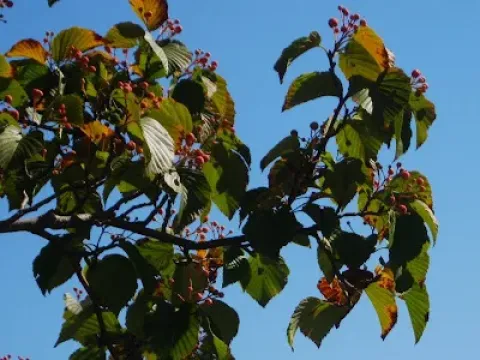
Yellow-veined mountain ash
Sorbus xanthoneura
The Yellow-veined mountain ash (Sorbus xanthoneura) is a deciduous tree species belonging to the Rosaceae family. It is native to China, where it grows naturally in forest habitats within temperate regions.
What the section contains
Yellow-veined mountain ash
This tree is highly valued for its striking foliage, which features distinct yellow venation on the leaves. It thrives in full sun or light shade, making it a versatile choice for various garden compositions.
Regarding soil conditions, it prefers fertile, well-draining loamy soils that remain consistently moist but not waterlogged. Proper site selection is crucial for the long-term health and growth of the tree.
The species is known for its cold hardiness, which allows it to adapt to diverse climatic conditions. Young trees benefit from occasional watering during dry spells to ensure the development of a robust root system.
In landscaping, this tree is often used as a specimen plant or in decorative groups. Its elegant structure and seasonal leaf color changes provide high aesthetic value throughout the year.
Common plant health issues include fungal diseases like leaf spot and rust, which can affect the foliage during humid seasons. Ensuring good ventilation within the canopy is an effective preventative practice.
Pests such as aphids and spider mites may occasionally infest the tree, particularly in stressed plants. Early detection via visual inspection is the best defense against major population outbreaks.
Managing the plant environment is essential; removing debris and fallen leaves prevents the overwintering of pathogens. Keeping the base of the tree clean reduces the likelihood of soil-borne infections.
Chemical control should be applied judiciously, favoring targeted treatments over broad-spectrum pesticides. Always follow the manufacturer's instructions for application rates and safety precautions.
Maintaining high plant vigor through balanced fertilization and proper watering makes the tree less susceptible to pests. A healthy plant is naturally more resilient to environmental and biological stresses.