
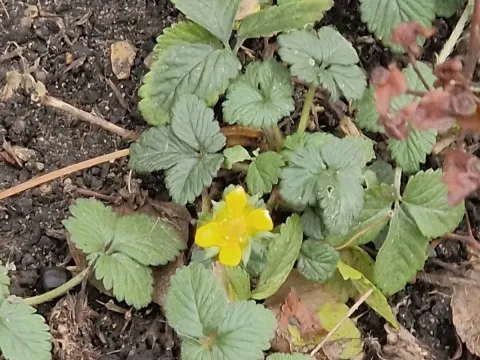
Cinquefoil
Potentilla L.
Cinquefoil (Potentilla L.) is a diverse genus of herbaceous plants and shrubs belonging to the Rosaceae family. This genus is widely distributed across the Northern Hemisphere and is valued for its hardiness and ability to thrive in varied environmental conditions.
What the section contains
 Dwarf cinquefoil
Potentilla canadensis L.
Dwarf cinquefoil
Potentilla canadensis L.
 Nepal cinquefoil
Potentilla nepalensis Hook.
Nepal cinquefoil
Potentilla nepalensis Hook.
 Potentilla sundaica
 (Miq.) W. Theob.
Potentilla sundaica
Potentilla sundaica (Miq.) W. Theob.
 Silver cinquefoil
Potentilla argentea L.
Silver cinquefoil
Potentilla argentea L.
 Silverweed
Potentilla anserina L.
Silverweed
Potentilla anserina L.
 Spring cinquefoil
Potentilla neumanniana Rchb.
Spring cinquefoil
Potentilla neumanniana Rchb.
 Sulphur cinquefoil
Potentilla recta L.
Sulphur cinquefoil
Potentilla recta L.
 Tormentil
Potentilla erecta (L.) Raeusch.
Tormentil
Potentilla erecta (L.) Raeusch.
 White cinquefoil
Potentilla alba L.
White cinquefoil
Potentilla alba L.
Cinquefoil
The successful cultivation of Potentilla requires well-drained soil with a neutral to slightly acidic pH. The crop thrives in full sun, which is essential for healthy development and maximum biomass production. Sites with high moisture retention but without standing water are considered optimal for large-scale production.
Cinquefoil is known for its high frost resistance, making it suitable for temperate regions. It displays significant resilience to heat and occasional dry spells once the root system is well-established, though supplemental irrigation during the seedling stage is highly recommended for uniform crop density.
Maintenance of the crop involves regular weeding and loosening of the soil, especially in the early growing seasons. To ensure consistent yields, periodic fertilization with balanced NPK fertilizers is beneficial, as it supports both root growth and the development of the aerial parts used in pharmacological applications.
The agricultural and economic utility of Potentilla encompasses two main sectors: medicinal extraction, where the plant is processed for its tannin and flavonoid content, and ornamental landscaping, where specific shrub species serve as soil stabilizers and low-maintenance hedges.
The primary diseases affecting Potentilla include powdery mildew and rust, which often thrive in environments with poor air circulation. To manage these pathogens, it is advised to maintain proper plant spacing and practice regular pruning to improve air movement through the canopy.
Pest pressures are typically caused by leaf-eating insects and aphids. Integrated pest management strategies, such as the use of natural predators or targeted biological insecticides, are preferred to maintain the quality standards of the harvested raw materials and ensure environmental safety.