
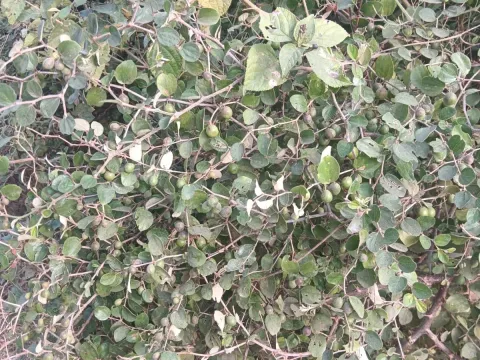
Jujube
Ziziphus
Jujube, or Ziziphus, can be propagated through seeds or vegetative methods such as grafting and cuttings. Seed propagation requires stratification due to the tough endocarp, which inhibits germination if not properly treated beforehand.
What the section contains
 Buffalo thorn
Ziziphus mucronata
Buffalo thorn
Ziziphus mucronata
 Mistol
Ziziphus mistol
Mistol
Ziziphus mistol
 Parry's Jujube
Ziziphus parryi
Parry's Jujube
Ziziphus parryi
 Ziziphus celata
Ziziphus guaranitica
Ziziphus guaranitica
Ziziphus celata
Ziziphus celata
Ziziphus guaranitica
Ziziphus guaranitica
 Ziziphus lotus
Ziziphus lotus
Ziziphus lotus
 Ziziphus nummularia
Ziziphus nummularia
Ziziphus nummularia
 Ziziphus oenopolia
Ziziphus oenopolia
Ziziphus oenopolia
 Ziziphus pubescens
Ziziphus pubescens
Ziziphus pubescens
 Ziziphus reticulata
Ziziphus reticulata
Ziziphus reticulata
 Ziziphus rignonii
Ziziphus rignonii
Ziziphus rignonii
 Ziziphus rivularis
Ziziphus rivularis
Ziziphus rivularis
 Ziziphus rugosa
Ziziphus rugosa
Ziziphus rugosa
 Ziziphus taylorii
Ziziphus taylorii
Ziziphus taylorii
 Ziziphus xylopyrus
Ziziphus xylopyrus
Ziziphus xylopyrus
Jujube
Sowing in open ground should be conducted in late spring when the soil temperature consistently reaches 15 to 20 degrees Celsius. This ensures a favorable environment for the seeds to sprout and develop into healthy seedlings without the risk of frost damage.
Vegetative propagation is the preferred method for commercial orchards as it guarantees the preservation of specific cultivar traits. Grafting onto hardy rootstocks significantly accelerates the onset of fruit production compared to trees grown directly from seeds.
Planting saplings should be performed during the dormant season, preferably in early spring, to allow the root system to establish before the onset of the summer heat. A spacing of 4 to 5 meters between trees is recommended to facilitate optimal growth.
Proper site selection is crucial for the success of the planting process. Jujube trees demand full sun exposure throughout the day to ensure both the vigor of the tree and the quality of the developing fruit crop during the growing season.
The jujube tree, a member of the Rhamnaceae family, is highly valued for its exceptional adaptability to various environmental conditions. It thrives in hot, sunny climates and is notably tolerant to periods of prolonged drought once established.
While jujube is not strictly demanding regarding soil type, it performs best in well-drained loamy or sandy soils. It is essential to avoid sites with waterlogged or heavy clay conditions, as the root system is susceptible to decay under such circumstances.
Climatic requirements focus on a long, warm growing season, which is necessary for the fruit to fully ripen and develop its characteristic sugar content. Mature trees are hardy and can withstand significant winter freezes without permanent damage.
Basic agronomic care includes weed control and periodic soil aeration within the tree's drip line. Mulching can be used to maintain soil moisture and discourage competitive weeds during the crucial establishment years of the young trees.
Fertilization should be balanced based on the tree's growth stage, focusing on nitrogen in the spring to encourage foliage development and potassium later in the season to enhance fruit quality and overall tree hardiness against winter conditions.
Jujube trees are prolific producers, with yields increasing significantly as the trees reach maturity. Grafted trees typically begin bearing fruit within two to three years after planting, reaching full production capacity by age seven to ten.
An average mature jujube tree can yield between 30 and 80 kilograms of fruit per season, depending on the cultivar and the quality of maintenance. Proper pruning is essential to balance vegetative growth with heavy fruit production cycles.
The culinary applications of jujube fruit are extensive, including fresh consumption, drying, and processing into jams or traditional herbal products. The fruit is highly regarded for its high vitamin C content and unique sweet flavor profile.
Effective orchard management involves selecting cultivars with staggered ripening times to streamline the harvesting process. This ensures that the labor requirements for picking remain manageable and that the fruit reaches the market at peak maturity.
Storage of fresh fruit is relatively brief, so timely processing is key to maximizing profit. Drying is the most common method of preservation, which concentrates the fruit's sugars and nutrients, allowing for an extended shelf life throughout the year.
Jujube trees possess an incredibly robust immune system, making them resistant to most common diseases that affect other orchard fruits. This natural resilience drastically reduces the need for chemical disease management in commercial jujube production.
The main potential threat is the jujube fruit fly, which may affect fruit quality if populations are high. Regular monitoring during the fruit maturation stage is recommended to detect any signs of infestation and determine if intervention is necessary.
Preventative measures are the best defense against pests. This includes the removal of fallen fruit and debris from the orchard floor, which disrupts the life cycle of pests and minimizes the risk of them overwintering near the host trees.
In cases where pest populations exceed economic thresholds, selective, low-toxicity insecticides may be applied. However, due to the fruit's rapid ripening process, it is critical to observe strict pre-harvest intervals to ensure product safety.
Maintaining a healthy, well-pruned tree is the ultimate strategy for pest and disease control. A well-ventilated canopy prevents the buildup of humidity and creates a hostile environment for most potential pathogens, ensuring a thriving orchard.
Harvesting jujube is a delicate task as fruits on a single tree do not ripen simultaneously. Multiple harvest passes are usually required, picking only those fruits that have turned a rich brown color and reached their peak sweetness.
Hand-picking is the preferred method for high-quality fresh market fruit to prevent bruising and skin damage. For large-scale operations, mechanical shakers can be utilized, provided that the orchard has appropriate catchment systems underneath.
Sorting after harvest is vital to separate the fruit into grades. Prime, undamaged fruit is destined for the fresh market, while smaller or cosmetically imperfect fruits are perfectly suited for drying or further industrial processing into snacks.
Sun-drying is a traditional and highly efficient method for jujube preservation. Properly dried fruit becomes sweet and chewy, developing a texture similar to dates, which is why jujube is often colloquially known as the red date.
The harvest season concludes before the first heavy frost, ensuring that the final pick is mature and free from cold injury. Proper timing of the harvest is the final step in ensuring that the crop meets consumer expectations for quality and flavor.