
Ziziphus celata
Ziziphus celata
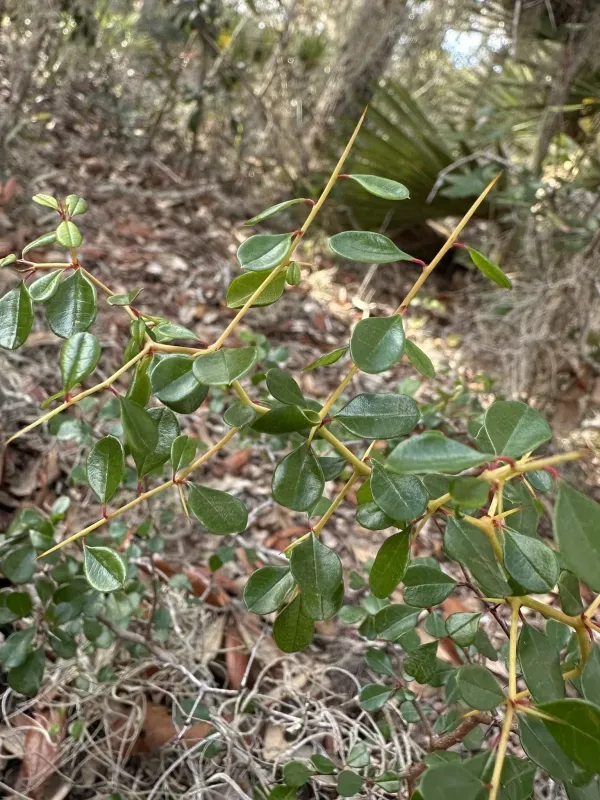
Description
Growing requirements
Ziziphus celata, commonly known as the Florida jujube or hidden jujube, is a rare woody shrub belonging to the Rhamnaceae family. It is an extremely specialized species with a narrow distribution, endemic to the central region of the Florida peninsula.
This plant is naturally adapted to the scrub ecosystem, characterized by deep, well-drained, sandy soils. It thrives in high-light environments and is evolved to cope with periodic water scarcity, typical of the xeric conditions found in its native habitat.
Botanically, Ziziphus celata is distinguished by its ability to reproduce vegetatively through root suckering. This allows it to form localized, genetically similar colonies, which is an important survival strategy when seed production is low or environmental conditions are unstable.
Cultivation requirements for this species are highly specific. It demands excellent soil aeration and high solar exposure to maintain physiological vigor. Because it is highly sensitive to soil disruption and root disturbance, it is rarely grown as a commercial crop.
Research into the plant's physiology suggests it relies heavily on specific mycorrhizal associations present in native sandy soils. Any attempt at cultivation requires replicating these natural conditions, making it more of a conservation subject than a standard agricultural commodity.
Main diseases and pests
The primary threat to Ziziphus celata is the loss of its native scrub habitat due to urban development and agricultural expansion. This loss has driven the species into a precarious status, where every remaining individual is of high conservation value.
Invasive plant species pose a significant threat by outcompeting Ziziphus celata for light and soil nutrients. Without the natural disturbance regimes, such as periodic wildfire, the scrub habitat quickly succeeds to denser forest, which is unsuitable for the sun-loving jujube.
The species can be vulnerable to pathogens that thrive in changing environmental conditions. Root rot, caused by various soil-borne fungi, can devastate populations if the soil moisture levels are not strictly managed in protected garden environments.
Agricultural chemicals, particularly herbicides applied to nearby fields, can drift and impact the sensitive root systems of these shrubs. Such chemical stress reduces the plant's natural resistance to local pests and diseases.
Conservation efforts currently focus on establishing protected areas where land management mimics historical fire regimes. Protecting the site from soil compaction and maintaining the integrity of the native vegetation are critical for the survival of the species.