
Ziziphus nummularia
Ziziphus nummularia
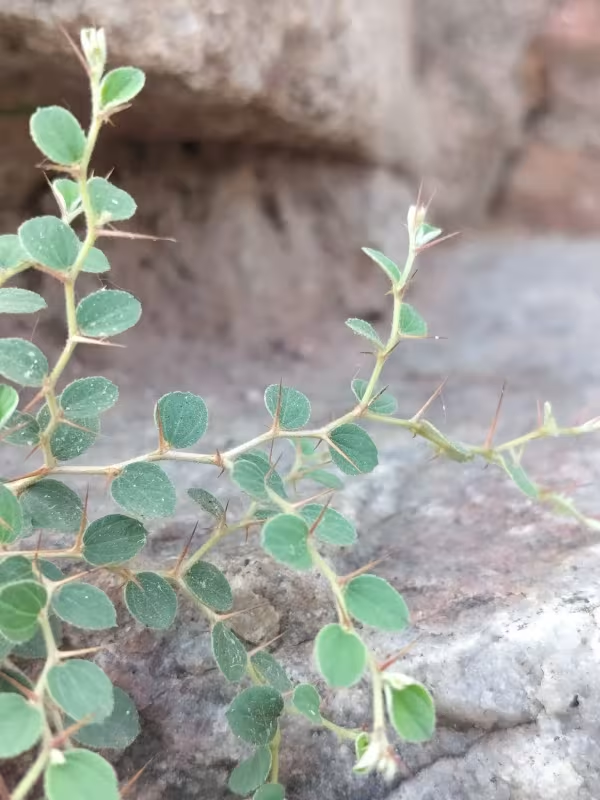
Description
Sowing dates
Propagation of Ziziphus nummularia is primarily achieved through seeds or root suckers. Seeds require proper stratification to break dormancy and ensure high germination rates before planting in the spring.
When selecting a planting site, choose an area with well-drained, loose soil and full sun exposure. These plants thrive in conditions where other traditional crops might struggle due to lack of moisture.
Seeds should be sown at a depth of 3 to 5 centimeters. Initial irrigation is necessary to establish the root system, although the plant becomes highly drought-tolerant once fully mature.
Spacing is a crucial factor for plantation management. Proper distance allows for effective ventilation and provides space for the shrub's natural spreading growth pattern.
Maintaining clear ground around young plants during the first two growing seasons will help ensure healthy development and prevent competition from weeds.
Growing requirements
Ziziphus nummularia, a member of the Rhamnaceae family, is native to arid and semi-arid regions. It is highly adapted to extreme heat and prolonged dry spells.
The shrub performs best in sandy or loamy soils with a neutral or slightly alkaline pH. Its root system is capable of penetrating deep into the soil to access moisture.
Climate adaptability is the plant's greatest strength. It is commonly found in desert environments and is highly resistant to heat waves that would damage other foliage.
While the species is hardy, protecting it from frost during its early years can lead to better long-term performance and higher structural integrity of the bush.
Regular pruning helps maintain a desirable shape, facilitates easier harvesting of fruits, and encourages the growth of fresh, nutrient-dense branches for livestock grazing.
Yield
The fruits of Ziziphus nummularia, while small, are a vital food source in desert regions, rich in sugars and essential vitamins needed in harsh environments.
Agricultural utility extends beyond food production; this plant is an excellent fodder source. Goats, sheep, and camels readily consume its leaves and young stems.
In arid climates, the plant acts as a windbreak and soil stabilizer. Its deep roots help prevent desertification and soil erosion, providing ecosystem services to local farms.
Yields can vary based on precipitation levels during the flowering period, though the plant is remarkably resilient compared to more fragile fruit-bearing species.
Sustainable harvest strategies involve gathering ripened fruits for drying, which allows for year-round availability of a nutritious, long-lasting staple food.
Main diseases and pests
Ziziphus nummularia possesses significant natural resistance to most common diseases affecting fruit crops, making it ideal for low-input agricultural systems.
Pest pressure is generally low. Localized infestations of weevils might occur on buds or foliage, but these rarely reach levels that threaten the total harvest.
Fungal issues are rare and typically only appear if the environment becomes unexpectedly humid for an extended period, which can be mitigated with proper site selection.
Small rodents can pose a risk to young plants by gnawing on the bark. Protective guards around the base of the stems are sufficient to prevent this damage.
The plant's natural chemical defense mechanisms and structural resilience keep the need for pesticides and heavy chemical intervention to an absolute minimum.
Harvesting
Harvesting fruits is a selective process. The fruit is ready when it turns reddish-brown, at which point it can be collected from the ground or shaken from the branches.
Fodder is often harvested by trimming back secondary growth. This process encourages new, more palatable shoots to develop for future grazing cycles.
Post-harvest management involves drying the fruits under direct sunlight, a traditional method that preserves them for consumption during seasons when fresh food is scarce.
Caution must be exercised during the harvesting process, as the shrub typically features thorns that protect the plant from overgrazing by animals.
Stored products should be kept in a dry, ventilated area to prevent moisture accumulation and ensure long-term stability of the dried fruit supply.