
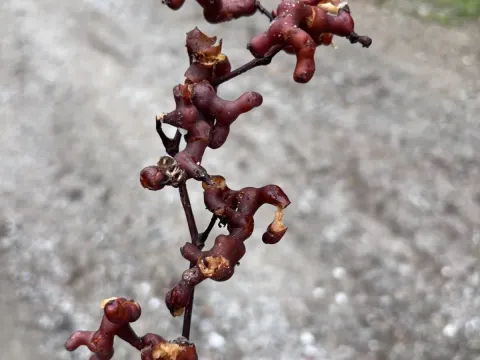
Japanese Raisin Tree
Hovenia Thunb.
Propagation of Hovenia dulcis is typically achieved through seeds, which require a cold stratification period of 2 to 3 months to break dormancy. Sowing occurs in spring into well-draining, nutrient-rich soil.
What the section contains

Japanese Raisin Tree
Germination is most successful at temperatures between 20 and 25 degrees Celsius. Maintaining consistent soil moisture is crucial, but waterlogging must be avoided to prevent seed decay.
For uniform plant quality, vegetative propagation via softwood cuttings in a greenhouse setting with rooting hormones is often preferred by commercial growers.
Seedlings should be transplanted to their permanent outdoor location once the danger of spring frost has completely passed. Protection from intense afternoon sun is recommended during the first year.
Planting spacing is critical for long-term health, requiring at least 5 to 6 meters between individual trees to accommodate their broad canopy and extensive root system.
As a member of the Rhamnaceae family, the Japanese raisin tree thrives in full sun but prefers shelter from high-velocity cold winds during the winter months.
The ideal soil profile is deep, loamy, and rich in organic matter with a slightly acidic to neutral pH. Excellent drainage is non-negotiable for root health.
While the tree is moderately drought-tolerant once established, regular irrigation during the growing season significantly improves vegetative growth and fruit production.
It is capable of surviving temperatures down to -15 to -20 degrees Celsius, although young trees require trunk wrapping or mulch to survive severe winters in colder regions.
Annual fertilization with a balanced NPK ratio promotes vigorous growth. Nitrogen applications in early spring should be followed by potassium-heavy fertilizers to improve cold hardiness.
The primary harvest consists of the fleshy, thickened peduncles (fruit stalks) rather than the tiny, hard capsules themselves. An adult tree can produce up to 30–40 kilograms of these stalks annually.
Trees typically reach sexual maturity and begin fruiting between the 5th and 7th year. Reliable annual yields are possible under optimal cross-pollination conditions.
The peduncles are highly prized for their honey-like flavor and high sugar content (up to 20%), making them excellent for jams, syrups, and traditional medicinal extracts.
Due to their antioxidant-rich properties, they are gaining interest in the food processing industry as a natural additive and health-promoting ingredient.
Commercial plantations often incorporate multiple cultivars to ensure effective cross-pollination, which is vital for maximizing both the quantity and quality of the peduncle harvest.
The Japanese raisin tree is generally robust and resistant to most common orchard diseases, provided it is not stressed by improper soil drainage or extreme neglect.
Aphids and scale insects represent the most common pest threats, often targeting tender new leaves and shoots. Regular monitoring during the active growth phase is advised.
Systemic insecticides may be employed if pest populations reach economic thresholds. Producers must strictly adhere to pre-harvest intervals to ensure the final product is safe for consumption.
Preventative cultural practices, such as proper crown thinning and removal of deadwood, enhance air circulation and reduce the humidity levels that favor fungal development.
Winter sunscald and frost cracks can create entry points for pathogens, making trunk protection in young trees a critical management strategy for long-term orchard survival.
Harvesting takes place in late autumn after the first frost, which helps transition the peduncles from a woody texture to a sweet, edible state.
The peduncles are manually harvested from the branches. Care must be taken to remove them cleanly without damaging the spurs that produce future fruit crops.
After collection, the peduncles are dried, which concentrates their sugars and intensifies their flavor, effectively turning them into a "raisin-like" superfood.
Properly dried peduncles can be stored for up to a year in cool, dry, and dark conditions, maintaining their quality and culinary utility for extended periods.
While mechanical shaking can be used in large-scale orchards, hand-harvesting ensures that the succulent peduncles remain intact and maintain the highest market grade.