
Hovenia
Hovenia
Hovenia, commonly known as the Japanese raisin tree, can be propagated through seeds, cuttings, or layering. Seed germination requires pre-stratification for 2–3 months at low positive temperatures to significantly increase the success rate.
What the section contains

Hovenia
The optimal time for sowing seeds in open ground or containers is early spring, once the soil has warmed to 10–12 degrees Celsius. When growing nursery stock, trees are typically transplanted to their permanent location at 2–3 years of age.
Cuttings are taken during the summer months, utilizing semi-hardwood shoots of the current season. Applying rooting hormones and maintaining high humidity levels are essential practices for successful root development.
When planting, it is crucial to maintain a spacing of at least 4–5 meters between trees, as the plant develops a wide and spreading crown. Prepare planting pits in advance with organic fertilizer and ensure excellent drainage to prevent root issues.
In regions with cooler climates, container gardening is preferred, allowing the tree to be moved into a frost-protected environment during the harsh winter months.
Hovenia belongs to the Rhamnaceae family and is native to the forests of East Asia, including China, Japan, and the Korean Peninsula. It is a light-loving plant that thrives best in well-lit areas protected from cold, strong winds.
The culture is demanding regarding soil fertility; it prefers deep, loose, loamy, or sandy soils with a neutral or slightly acidic pH. Proper drainage is vital, as the root system is highly sensitive to waterlogged conditions.
Hovenia has moderate climate requirements. While adult trees can withstand brief frost, young shoots are vulnerable to temperatures below -10 degrees Celsius, necessitating protection in northern latitudes.
Consistent watering is essential, especially during the active growth phase and throughout periods of drought. During hot summer months, applying mulch around the root zone helps retain moisture and prevents soil overheating.
For vigorous growth, the tree requires periodic fertilization with complex mineral fertilizers in the spring and organic matter in the autumn to prepare the plant for its dormant stage.
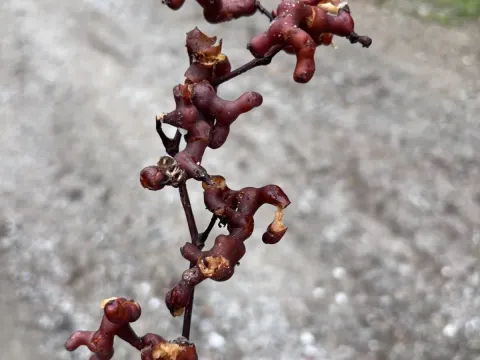
The primary economic value of Hovenia lies not in the actual fruit capsules, but in the fleshy, swollen peduncles (flower stalks). After pollination, these stalks expand, becoming juicy and sweet, reminiscent of raisins, melons, or pears.
A mature tree can yield between 30–35 kg of edible peduncles once it reaches 10–15 years of age. Fruiting usually commences 5–7 years after the sapling has been established in the ground.
The fruit capsules attached to the ends of the peduncles are dry and generally considered inedible. Consequently, it is the swollen axes of the inflorescences that are harvested, which turn a brownish hue upon reaching full maturity.
Commercial utilization involves consuming the product fresh, as well as drying, which concentrates the sugars and creates a nutritious raisin-like snack that is popular in the food and confectionery industries.
Hovenia timber is also commercially significant; it is strong, durable, and easy to work with, making it highly valued in furniture production, often compared to cherry wood in terms of quality.
Hovenia is considered a relatively resilient crop; however, poor agricultural practices or excessive humidity can lead to fungal infections, such as powdery mildew or various leaf spot diseases.
Pests common to this species include aphids and scale insects, which target young shoots and leaves. Regular monitoring and preventive insecticide treatments in early spring help keep potential damage to a minimum.
Root rot may occur if the soil is systematically overwatered. To prevent this, ensure high-quality drainage and avoid soil compaction around the tree trunk.
During winter, young saplings are susceptible to damage by rodents, making trunk protection with protective meshes or wraps an essential agricultural measure in areas with high populations of rabbits or hares.
Overall, with proper attention to watering and fertilization regimes, Hovenia exhibits excellent hardiness, requiring minimal chemical protection in a private garden setting.
Harvesting takes place in late autumn, ideally following the first light frosts, when the peduncles achieve their characteristic dark brown color and reach maximum sweetness as the leaves begin to fall.
The harvest process involves carefully clipping the fruit clusters along with their fleshy peduncles. It is important to perform this work delicately to avoid damaging the fruiting buds for the following year located at the tips of the twigs.
Fresh peduncles have a limited shelf life, so they are either consumed shortly after harvest or dried to remove excess moisture, which helps them develop their distinctively rich, candy-like aroma.
Drying is best achieved in well-ventilated areas or in food dehydrators at temperatures not exceeding 45 degrees Celsius to preserve the natural sugars and vitamins within the plant tissue.
Following the harvest, it is recommended to perform sanitary pruning to remove any dead or damaged branches, which facilitates better light penetration for the next season and improves the quality of future peduncles.