
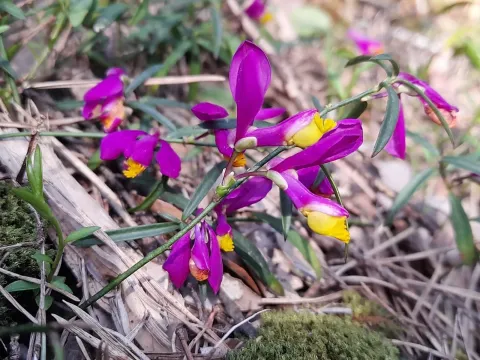
Polygala vayredae
Polygala vayredae
Polygala vayredae is a perennial herbaceous plant belonging to the Polygalaceae family. Native to the Pyrenees, this species is a specialist of rocky mountainous terrains. Its evolutionary adaptation to high-altitude environments makes it a distinctive botanical subject known for its hardiness and refined appearance.
What the section contains
Polygala vayredae
The plant features a creeping rhizome system that allows it to form dense, low-growing mats of dark green, lanceolate leaves. Its most striking feature is the vibrant purple flower, which mimics the shape of a butterfly. These flowers appear in late spring, creating a vivid display that persists even in poor, rocky soil conditions.
Successful cultivation of Polygala vayredae requires a growing medium that mimics its natural limestone habitat. The soil must be exceptionally well-draining, as the species is highly sensitive to root rot caused by stagnant moisture. A mixture of gravel, grit, and sandy loam is recommended for optimal root aeration and healthy development.
In terms of climate, the species thrives in environments with clear air and significant temperature fluctuations between day and night, common in high-altitude regions. While it exhibits good cold tolerance, it requires protection from excessive moisture during winter thaw periods, which can be achieved through strategic placement in raised alpine beds.
The primary use of this plant is ornamental, specifically within specialized rock gardens and troughs. Due to its slow-growing nature and specific habitat requirements, it is considered a collector's item in horticulture. It is highly valued for its ability to bring authentic alpine aesthetics to artificial rock landscapes while maintaining a compact and tidy growth habit.
The most significant threats to Polygala vayredae are soil-borne pathogens and root rot induced by improper irrigation or poor drainage. Excessive humidity can lead to fungal infections, affecting both the root system and the foliage. Preventive measures include ensuring proper site drainage and regular inspection for signs of fungal decay in the crown area.