
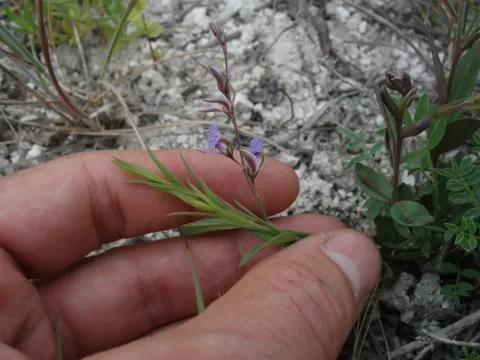
Siberian Milkwort
Polygala sibirica
Siberian Milkwort, scientifically known as Polygala sibirica, belongs to the Polygalaceae family. Agricultural cultivation involves sowing seeds either during the late autumn for wintering or in early spring once soil temperatures are stable.
What the section contains
Siberian Milkwort
Seeds should be planted at a shallow depth of 1-2 centimeters in well-drained, prepared soil to ensure optimal contact for germination. Proper seedbed preparation is vital to support the slow initial growth stages of the plant.
Stratification of the seeds is highly recommended for spring planting to improve germination rates significantly and ensure a more uniform emergence of seedlings across the field.
During the first year, the crop focuses on forming a basal rosette and developing its root system. Therefore, maintaining a clean field free of weeds is crucial for the survival and health of young plants.
The spacing between rows should be optimized to allow for future plant spread, as the Siberian Milkwort grows in size over several years and requires sufficient space to thrive without competition.
The crop thrives in fertile, well-drained loamy or sandy soils with a neutral to slightly alkaline pH. It is essential to avoid sites with poor drainage or heavy clay that may cause waterlogging.
Polygala sibirica is notably hardy, demonstrating good resistance to frost and drought. This makes it a viable candidate for cultivation in various temperate and continental climatic zones.
While it prefers sunny locations for optimal biomass development, it can tolerate partial shade, which may sometimes be beneficial during extremely hot summer months to protect the plants.
Nutrient management should focus on phosphorus and potassium to encourage robust root growth. Nitrogen applications should be carefully balanced to prevent excessive leafy growth that does not contribute to the root quality.
Regular monitoring of soil moisture is necessary. While the plant is drought-tolerant once established, providing consistent moisture during the early growth phase and severe heat waves improves productivity.
The commercial harvest of Siberian Milkwort roots typically reaches peak productivity after 3 to 4 years of growth, when the saponin content within the roots is at its highest.
Productivity is highly dependent on effective crop management, including regular weeding and maintenance of soil structure, which directly impacts the size and quality of the harvestable roots.
Agronomists assess the yield by performing sample excavations to determine the average dry root mass per square meter, which helps in predicting the economic return of the plantation.
While roots are the primary product for pharmaceutical processing, some growers may explore secondary uses for the aerial biomass, provided it is extracted under sustainable practices.
Consistency in field management ensures that the harvest remains steady throughout the operational lifespan of the plot, making the crop a reliable choice for medicinal herb producers.
Siberian Milkwort is primarily susceptible to fungal diseases such as root rot and leaf spot, which are often exacerbated by poor drainage and excessive moisture around the root zone.
Pest threats include various sap-sucking insects, such as aphids and spider mites, which can weaken the plants and increase their susceptibility to secondary infections during dry periods.
Crop rotation is the most effective strategy for managing the accumulation of pathogens in the soil, preventing the build-up of specific fungal threats over multiple planting cycles.
- Regular inspection for pest outbreaks and early symptoms of disease.
- Implementation of strict phytosanitary measures in the field.
- Avoidance of waterlogged conditions through improved drainage management.
- Use of approved biological pest control agents to minimize chemical use.
Early identification of threats is critical. Proactive monitoring allows for timely intervention, preserving the quality of the raw material required for medical-grade products.
Root harvesting is conducted in late autumn after the plant has entered dormancy. At this time, the concentration of secondary metabolites, particularly saponins, reaches the required pharmaceutical standard.
The roots are carefully excavated to minimize damage, cleaned of residual soil, and washed thoroughly. Proper handling during this stage is essential to maintain the structural integrity of the roots.
Drying must be performed in specialized drying facilities at temperatures not exceeding 60 degrees Celsius. Excessive heat can degrade the bioactive components, rendering the product ineffective for its intended medicinal use.
After reaching the target moisture content, the roots are sorted and stored in breathable containers in a dry, dark, and well-ventilated environment to prevent mold and quality deterioration.
The entire post-harvest process is designed to ensure maximum retention of active chemical constituents, meeting the strict requirements of pharmaceutical manufacturers who purchase the crop.