
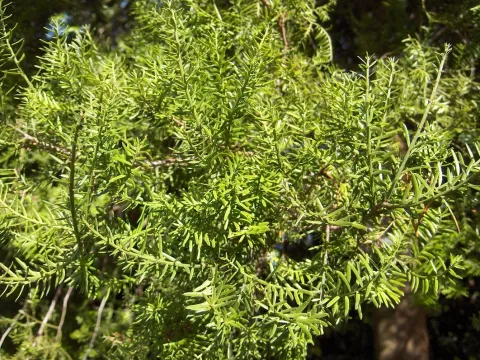
Podocarpus spicatus
Podocarpus spicatus
Podocarpus spicatus, commonly referred to as Matai, is a prominent coniferous tree belonging to the Podocarpaceae family. It is an iconic species native to the temperate forests of New Zealand.
What the section contains
Podocarpus spicatus
The tree is prized for its high-quality, durable timber, which has historically been used in construction and flooring. Botanically, it is classified within the Prumnopitys genus due to its specific reproductive morphology.
Optimal growth is achieved in deep, fertile, and well-drained soils. The species thrives in humid environments with high rainfall and avoids areas prone to prolonged drought or extreme temperature fluctuations.
Growth rate is notably slow, especially during the juvenile stage. This slow development means that site preparation and early-stage protection are essential for ensuring the long-term viability of the plantation.
When selecting a site, it is crucial to consider the tree's need for shelter. In open or wind-exposed areas, the growth of young specimens can be severely stunted by desiccation caused by strong winds.
Introduced mammalian pests, particularly possums and deer, represent the most significant threat to Podocarpus spicatus populations, as they cause extensive damage by browsing on foliage and stripping bark.
Fungal pathogens can be problematic in high-density nursery settings or areas with poor air circulation, often manifesting as root rot or foliage blight when drainage conditions are suboptimal.
Competition from fast-growing invasive weeds is a critical factor in the establishment phase. Without active vegetation management, young trees are easily outcompeted for light and soil nutrients.
Insect pests, including various sap-sucking insects and leaf-miners, may cause localized damage to the foliage, which, while rarely fatal for mature trees, can significantly stress seedlings.
Comprehensive pest management programs, including physical barriers for protection against mammals and regular forest health monitoring, are necessary to maintain the integrity of the stand.