
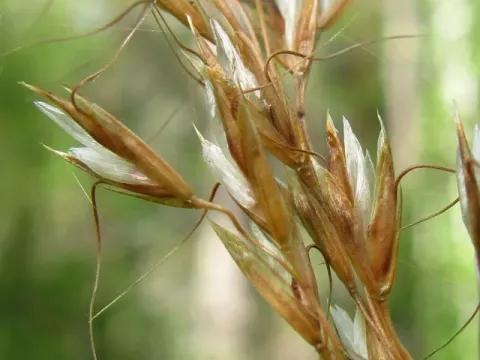
Trisetum
Trisetum
Trisetum is typically established during early spring or late summer to take advantage of soil moisture levels. Proper seedbed preparation is crucial, requiring a fine, firm surface to ensure optimal germination of the small seeds.
What the section contains
 Alpine trisetum
Trisetum alpestre
Alpine trisetum
Trisetum alpestre
 Brown oat-grass
Trisetum fuscum
Graceful trisetum
Trisetum gracile
Brown oat-grass
Trisetum fuscum
Graceful trisetum
Trisetum gracile
 Rigid oat grass
Trisetum rigidum
Rigid oat grass
Trisetum rigidum
 Siberian oatgrass
Trisetum sibiricum
Siberian oatgrass
Trisetum sibiricum
 Trisetum argenteum
Trisetum baregense
Trisetum baregense
Trisetum argenteum
Trisetum argenteum
Trisetum baregense
Trisetum baregense
 Trisetum bifidum
Trisetum bifidum
Trisetum bifidum
 Trisetum macrotrichum
Trisetum macrotrichum
Trisetum macrotrichum
 Trisetum splendens
Trisetum subalpestre
Trisetum subalpestre
Trisetum splendens
Trisetum splendens
Trisetum subalpestre
Trisetum subalpestre
 Two-rowed yellow oatgrass
Trisetum distichophyllum
Two-rowed yellow oatgrass
Trisetum distichophyllum
 Velvety trisetum
Trisetum velutinum
Velvety trisetum
Trisetum velutinum
Trisetum
Seeds should be sown at a shallow depth of approximately 1 to 2 centimeters. Using a drill seeder or broadcasting with subsequent rolling helps achieve consistent seed-to-soil contact, which is vital for establishment.
The species is often included in perennial pasture mixes with legumes. This combination improves the nitrogen balance in the soil and increases the overall protein content of the harvested forage.
Seeding rates are determined by the specific climate and regional conditions. It is important to avoid over-seeding, as sufficient space is needed for the plant to develop its initial root system during the first year.
Once established, the grass exhibits a strong ability to persist, provided that grazing and cutting management practices are not overly intensive during the early growth stages.
Trisetum thrives on well-drained soils that are rich in organic matter. While it is adaptable to various soil types, it performs best in environments where the pH level remains between 5.5 and 7.0.
The plant is highly regarded for its cold hardiness and is frequently found in high-altitude environments. It has a high tolerance for frost and can withstand the challenges of harsh winter conditions in northern latitudes.
Light availability is a key factor for maximizing yield. It is recommended to cultivate the grass in open fields, as excessive shading can lead to reduced biomass production and weakened stem structure.
Nutrient requirements include balanced nitrogen, phosphorus, and potassium inputs. Applying nitrogen early in the growing season promotes vigorous regrowth, while potassium helps improve disease resistance.
Water requirements are moderate, though consistent moisture during the peak growth phase in late spring is essential to achieving maximum dry matter yields for hay or grazing purposes.
The yield potential of Trisetum is impressive, especially under proper management. In a standard seasonal cycle, two cuts are typically harvested to maintain the vigor of the plant while maximizing biomass output.
The first harvest should coincide with the early heading stage to optimize the balance between energy content and total volume. Delaying the harvest results in a rapid decrease in forage digestibility.
The second cut is taken in late summer, allowing the grass enough time to recover and replenish carbohydrate reserves in the root system before the onset of the dormant winter season.
Productivity remains stable over many years if managed correctly, with the stand capable of remaining productive for up to 7 years. Overgrazing, however, can lead to a decline in overall stand density.
The quality of the yield, in terms of nutrient concentration, makes this grass a highly sought-after component in livestock diets, particularly for ruminants that require high fiber content.
Rust and powdery mildew are the most common diseases affecting Trisetum, particularly in humid or overcrowded conditions. Proper field ventilation and balanced fertilization are the primary management tools to mitigate these risks.
Insect pests such as cereal aphids and shoot flies can impact young stands. Monitoring and early intervention are necessary to ensure that the plants do not suffer from stunted growth during the critical establishment phase.
Weed competition during the initial months can be a significant threat. Mechanical control or selective mowing can help reduce weed pressure until the grass establishes a competitive cover.
Root-damaging insects, such as wireworms, may require attention if the soil has a history of high pest populations. Proper rotation is a recommended preventive measure.
- Maintain good field drainage
- Monitor leaves for early fungal signs
- Ensure balanced nutrient application
- Avoid intensive grazing in the first year
- Select hardy, adapted cultivars
Harvesting should be timed precisely with the developmental stages of the grass. The goal is to maximize the nutrient density before the plant enters its reproductive stage, which causes stem lignification.
For haymaking, the cut grass should be left to wilt in the field until moisture content reaches approximately 15–17%. Frequent tedding facilitates uniform drying and prevents quality loss.
Silage production is an excellent alternative, offering a way to preserve the nutritional value of the grass even in areas with unpredictable rainfall during the summer months.
Equipment such as disc mowers with conditioners is ideal for this task, as they break the stems and accelerate the moisture release process, leading to higher-quality finished silage or hay.
Post-harvest management is equally important, ensuring that the stubble height is sufficient to protect the growth points of the plants, thus ensuring the longevity of the crop for the following year.