
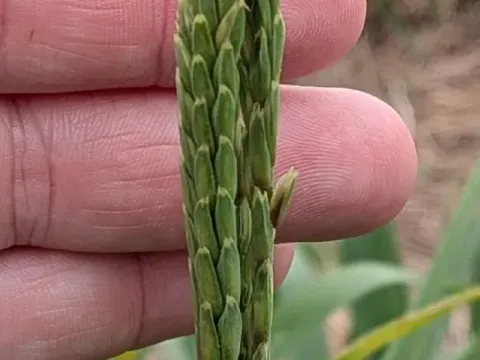
Tripsacum-corn hybrid
Tripsacum x Zea
The Tripsacum-corn hybrid is an intergeneric cross between maize (Zea mays) and species of the Tripsacum genus, belonging to the Poaceae family.
What the section contains

Tripsacum-corn hybrid
Sowing times are strictly determined by soil temperature; the seeds require at least 10–12°C for germination, usually occurring in late spring.
Pre-sowing treatment is essential for these seeds, as they often exhibit dormancy characteristics typical of their wild Tripsacum parents.
The planting depth should be maintained between 3 to 5 cm to ensure the seeds are positioned in the moist, warm seedbed required for rapid emergence.
Establishing the crop requires careful weed management during the first few weeks, as the initial growth phase of the seedlings can be slow compared to conventional corn.
The hybrid thrives in well-drained, fertile soils with a neutral pH, similar to the requirements of its maize parentage, but with higher adaptability to variable conditions.
Sunlight exposure is a critical factor for development; the plant performs best in areas with high solar radiation and adequate space for canopy development.
The plant exhibits superior drought tolerance compared to standard corn varieties, thanks to the deep-rooted architecture inherited from its wild ancestors.
While the hybrid is hardy, supplemental irrigation during the peak growth months can significantly boost biomass accumulation and overall plant vigor.
Fertilization regimes should be adjusted to account for the perennial nature of the crop, with a focus on nitrogen application to support multiple harvests per season.
The primary use of the Tripsacum-corn hybrid is for livestock fodder, specifically in the production of high-protein silage and green chop.
A major agricultural advantage is the potential for multiple cuts per growing season, which maximizes the utilization of the land throughout the summer.
The nutritional profile of the harvested biomass is generally rich in essential nutrients, making it a competitive alternative to traditional annual silage crops.
Yield stability increases after the establishment phase, as the root system becomes robust enough to support rapid regrowth after mechanical harvesting.
In addition to fodder, the crop is being researched for biomass energy production, as its high productivity and perennial nature offer sustainable output options.
Common agricultural pests such as aphids and stem borers can affect the biomass quality if not managed through integrated pest control strategies.
Fungal pathogens, particularly those causing leaf rust and root rot, represent significant threats under conditions of excessive moisture and poor air circulation.
Effective management involves monitoring plant density and implementing crop rotation strategies to minimize the buildup of soil-borne pathogens.
- Integrated weed control methods
- Timely fungicide applications
- Regular field scouting for early pest detection
Providing optimal growing conditions is the best defense, as healthy, vigorous plants are inherently more resistant to opportunistic pests and diseases.