
Trisetum splendens
Trisetum splendens
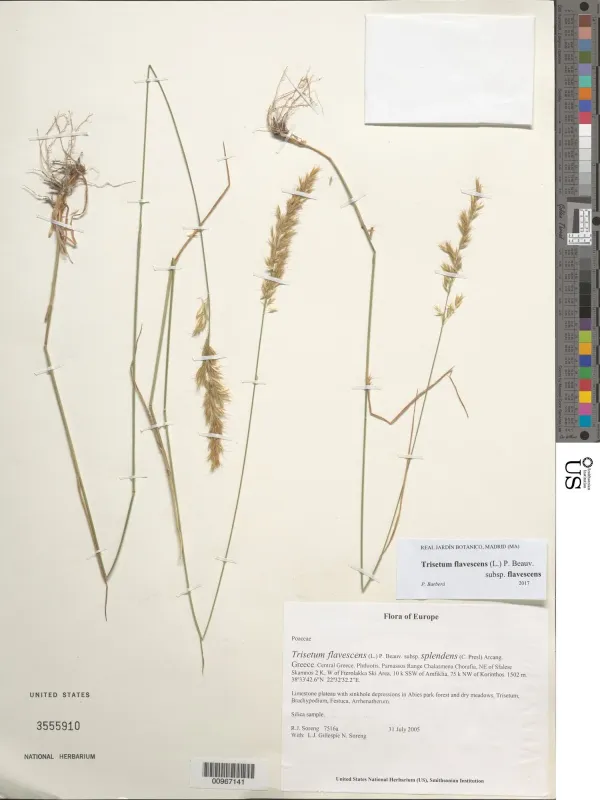
Description
Growing requirements
Trisetum splendens is a perennial grass species belonging to the Poaceae family. Known for its adaptability, this grass is a valuable component of meadow ecosystems and can be utilized in agricultural forage production in suitable climatic regions.
The species is native to mountainous regions and high-altitude grasslands, which gives it significant cold tolerance. Its robust nature makes it capable of thriving in temperate environments where other high-yield forage crops might struggle with winter dormancy or frost damage.
Regarding soil requirements, Trisetum splendens performs best in well-drained loamy or sandy-loam soils. It prefers soils with a neutral pH, although it exhibits moderate tolerance to slightly acidic conditions typical of mountain meadow habitats.
Adequate moisture is essential for initial establishment, yet the plant is generally intolerant to waterlogged soils. Ensuring good drainage is a critical management practice to maintain the health and vigor of the root system over multiple growing seasons.
Sunlight requirements are significant for this species. To achieve optimal biomass production and prevent thinning of the stand, it should be cultivated in open, well-illuminated areas where light competition from taller species is kept to a minimum.
Yield
The primary agricultural use of Trisetum splendens is as a high-quality forage source for hay production and grazing. It offers a balanced nutritional profile, particularly when harvested before the seed-head matures fully.
Yield potential is highly dependent on nitrogen availability and the overall management of the meadow. Under favorable conditions, the grass is capable of producing multiple cuts per year, provided there is sufficient moisture during the recovery phase.
Livestock find the forage palatable due to its high leaf-to-stem ratio, especially in the early stages of development. Regular grazing or mowing regimes are essential to stimulate tillering and maintain the overall density of the pasture.
Longevity is a notable attribute of this grass. In managed meadow systems, it can maintain a stable yield for several years, reducing the frequency of field renovation and lowering long-term cultivation costs for the farmer.
Effective pasture management includes rotational grazing, which allows the plants to recover their energy reserves after being defoliated, ensuring long-term persistence of the grass stand.
Main diseases and pests
Pathogenic threats for Trisetum splendens primarily include fungal diseases such as rusts and powdery mildew. These are more prevalent in dense stands with poor airflow and high ambient humidity, emphasizing the need for proper canopy management.
Insect pests, including various cereal flies and aphids, can cause localized damage, particularly during the early vegetative stages. Early season monitoring is vital for detecting these threats before they reach economic threshold levels.
Competition from aggressive broadleaf weeds is a significant factor in the success of the stand, especially during the establishment year. Integrated weed management practices are recommended to protect the young grass seedlings.
To reduce the incidence of disease, it is recommended to maintain balanced fertilization, as excessive nitrogen applications can promote lush growth that is more susceptible to fungal infections and lodging.
Overall plant health is best preserved by implementing a standard maintenance program that includes regular mowing or grazing, which prevents the build-up of old plant debris that often harbors pathogens.