
Rigid oat grass
Trisetum rigidum
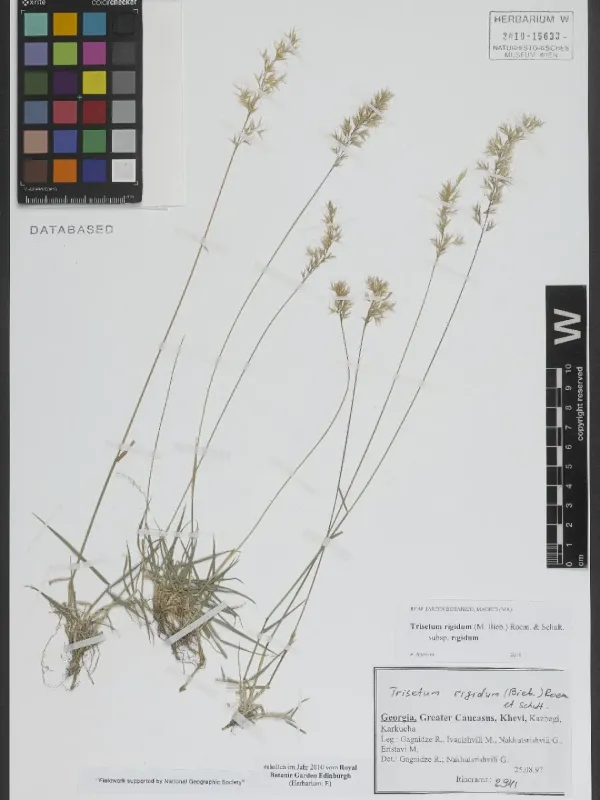
Description
Sowing dates
Rigid oat grass is a perennial grass species, making the timing of sowing critical for the establishment of long-term pastures or hayfields. The optimal time for sowing is early spring, as soon as the soil reaches physical maturity and warms up to 5–8 degrees Celsius.
Dormant seeding is also possible in regions with milder climates, allowing seeds to undergo natural stratification. In arid zones, it is recommended to prefer spring sowing with compulsory soil rolling to retain moisture.
The seeding depth is a crucial factor for this crop, given the small size of the seeds. The optimal range is 1 to 2 centimeters depending on soil type and available moisture in the top layer.
The seeding rate is calculated based on pure stands or as part of multi-component grass mixtures. Under intensive cultivation, it is important to ensure uniform distribution across the field to avoid competition between plants.
After sowing, the field must be rolled to improve seed-to-soil contact, which contributes to uniform emergence. This measure is particularly important in conditions where rainfall is scarce during the post-sowing period.
Growing requirements
Rigid oat grass is a crop adapted to specific environmental conditions, requiring certain soil and climatic parameters. The plant prefers moderately moist soils but possesses high winter hardiness, allowing it to withstand harsh winters.
Belonging to the Poaceae family, the plant features a robust root system that helps reinforce the surface soil layer. It demonstrates a high demand for mineral nutrients, especially nitrogen and phosphorus, during the active tillering phase.
It prefers neutral or slightly acidic soils and tolerates moderate salinity, which expands its range of use. Excessive waterlogging and prolonged water stagnation negatively affect root system development and may lead to crop failure.
The crop is light-loving, so when choosing a site for cultivation, shaded areas should be avoided. It responds well to open spaces where free air circulation and soil warming are ensured.
In the agricultural system, it is critically important to maintain a balanced fertilization regimen. Excess nitrogen can lead to lodging, while potassium fertilizers significantly increase the plant's resistance to diseases.
Yield
The yield of rigid oat grass directly depends on soil fertility and the management regime of the sward. Under conditions of optimal moisture supply and mineral fertilizer application, the crop provides a consistently high yield of green mass.
Maximum productivity is observed in the second or third year of the plant's life, when the sod is fully developed. During this period, it is important to ensure timely mowing to maintain the sward in its most nutritious phase.
When used for hay, dry matter yield can range from 3 to 6 tons per hectare depending on the frequency of mowing. The number of cuts depends on the duration of the growing season in the specific region.
In pastures, this grass is valued for its good regrowth ability after grazing. This allows for up to four grazing cycles per season, provided that rotational grazing is strictly followed.
To increase yield, annual spring harrowing is recommended, which promotes soil aeration and removes dead debris. This helps rejuvenate the stand and increase its overall productivity.
Main diseases and pests
The primary threats to rigid oat grass crops are fungal diseases that develop under high air humidity and soil waterlogging. The most dangerous include rust and various types of powdery mildew.
Cereal pests, such as flea beetles and the frit fly, can significantly reduce germination and weaken plants during the initial growth period. Monitoring crops at the 2-3 leaf stage is a mandatory protection measure.
Disease prevention consists of using high-quality seed material treated before sowing. It is also important to avoid overcrowded stands that promote microclimates favorable for infection development.
Among pests, the meadow moth is also notable; during outbreaks, it can cause significant damage to the green mass. Pest population control is carried out using insecticides when threshold values are reached.
Agricultural control methods, such as crop rotation and timely weed removal, significantly reduce the risk of crop damage. An integrated pest management system helps minimize the chemical load on the biocenosis.
Harvesting
Hay harvesting is recommended during the heading to early flowering stage, when nutrient content is at its peak. Later harvesting leads to stem lignification and a loss of nutritional value.
When producing hay, careful drying technology is important to preserve vitamin content and prevent nutrient leaching by precipitation. The use of modern mower-conditioners accelerates the mass dehydration process.
If the cultivation goal is seed production, harvesting should be performed in two stages when the panicles turn brown. This helps avoid losses from shattering, which is characteristic of many grass species when left standing too long.
When used as pasture, the grazing height should be limited to 5-7 centimeters. This is necessary to preserve the plant's growing point, which guarantees active regrowth and sward longevity.
Timely harvesting or grazing allows for effective management of the species composition of the sward, preventing less valuable weed species from dominating. A competent approach to management allows for using the stands for up to 5-7 consecutive years.