
Brown oat-grass
Trisetum fuscum
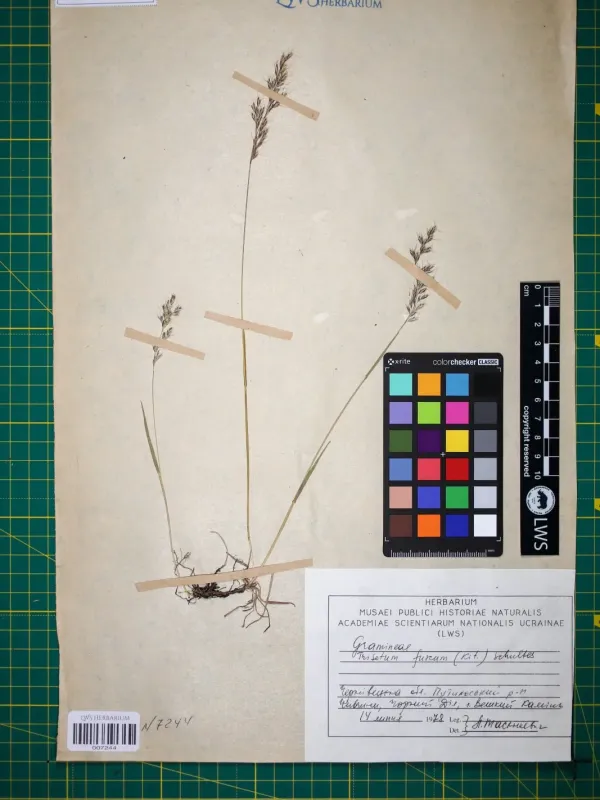
Description
Growing requirements
Brown oat-grass (Trisetum fuscum) is a perennial member of the Poaceae family, primarily adapted to harsh alpine and subalpine environments. It represents a vital component of natural grasslands, offering resilience in regions with short growing seasons and low temperatures.
The plant thrives in well-drained soils, showing a preference for loamy substrates that are rich in organic matter. While it requires consistent moisture to sustain growth, it does not tolerate waterlogged conditions, making slope cultivation a preferred method for optimal biomass production.
Botanically, the species is recognized by its dense tillering ability, which helps stabilize soil structures in high-altitude terrain. Its leaves are narrow and robust, and the inflorescence takes the form of a contracted panicle, which protects the developing seeds from the elements.
Agronomic management relies on capitalizing on its winter hardiness and its ability to germinate early in the spring. In agricultural settings, it is often utilized within pasture mixtures to provide consistent forage quality throughout the grazing season, even when soil nutrient levels are modest.
The primary use of this culture is for livestock grazing and hay production in mountainous regions where sensitive crops fail to produce high yields. Its durability makes it an essential species for sustainable land management in challenging ecological zones.
Main diseases and pests
The plant is susceptible to fungal pathogens such as rusts during periods of high humidity. Proper field management, including timely mowing and avoiding overgrazing, is crucial to maintaining the health and vigor of the stands.
Pest issues often involve stem-boring insects that target the developing shoots, potentially reducing seed yields. Integrated pest management, including regular monitoring and maintaining optimal plant density, is the recommended strategy for minimizing damage and ensuring stand longevity.