
Two-rowed yellow oatgrass
Trisetum distichophyllum
Description
Growing requirements
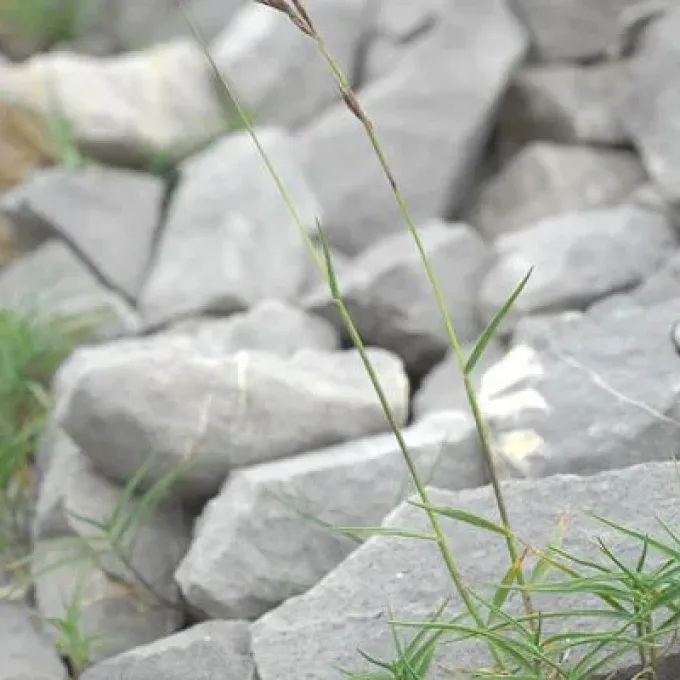
Trisetum distichophyllum, commonly known as the two-rowed yellow oatgrass, is a perennial member of the Poaceae family. It is primarily recognized as a wild grass species native to the alpine and subalpine zones of mountain ranges.
The plant thrives in calcareous, well-drained, rocky substrates. Its root system is specialized for stability in unstable mountain soils, helping to prevent erosion while efficiently extracting nutrients from mineral-rich earth.
Climatically, the species is highly resilient, capable of enduring harsh alpine winters and short, intensive growing seasons. It requires adequate sunlight and cannot compete effectively in dense, lush lowland meadows with high humidity.
Botanically, it is characterized by its distinct two-ranked leaf arrangement and dense, panicle-like inflorescences. These morphological adaptations help the plant conserve water and survive high-altitude wind exposure.
In terms of agricultural use, while not a mainstream industrial crop, it serves as vital forage for livestock grazing in mountain regions. Its ability to regenerate after grazing makes it a key component of sustainable high-altitude pasture management.