
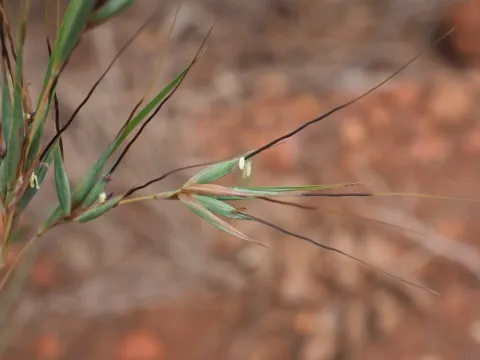
Themeda avenacea
Themeda avenacea
Themeda avenacea, commonly known as native oat grass, belongs to the Poaceae family. It is a perennial bunchgrass native to Australia, known for its significant role in grasslands and savanna ecosystems.
What the section contains
Themeda avenacea
This species thrives in well-drained soil environments. It is highly adaptable and can be found growing in various soil types, ranging from sandy loams to heavier clay soils, provided there is minimal waterlogging.
Climatic requirements for this grass include ample sunlight and warm temperatures. As a drought-tolerant species, it has evolved to persist in areas where rainfall is seasonal and high evaporation rates occur.
The plant demonstrates a strong ability to withstand periods of low water availability by entering a state of reduced metabolic activity, resuming growth quickly once favorable conditions return.
For agricultural purposes, ensuring a proper soil aeration level is essential to support deep root development, which is characteristic of this hardy grass species in its native habitat.
Themeda avenacea is primarily utilized as a forage resource for livestock. It provides a reliable source of green matter in regions where other more sensitive grass species struggle to survive the summer heat.
Grazing management is crucial for maintaining the health of the pasture. Rotational grazing patterns are recommended to prevent overgrazing, which can deplete the plant's carbohydrate reserves and reduce its density.
When harvested for hay, the timing should be carefully managed during the flowering stage. Cutting too early may result in lower biomass, while cutting too late leads to increased stem lignification and reduced digestibility.
Beyond agricultural uses, this grass is highly valued for environmental rehabilitation projects. Its robust root system makes it an excellent choice for stabilizing soil on slopes and preventing erosion.
Regular maintenance of the stands involves controlled burning or mechanical clearing of dead material, which encourages new, nutritious regrowth and minimizes the risk of wildfires in grassland areas.