
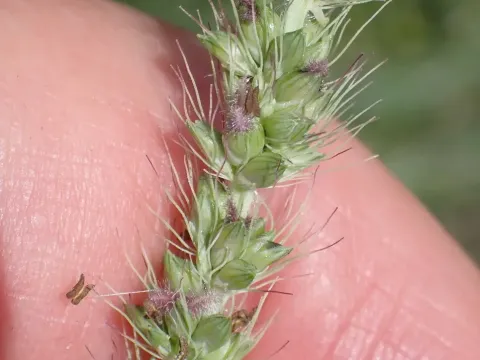
Thick-spike bristle grass
Setaria incrassata
Setaria incrassata is a perennial bunchgrass belonging to the Poaceae family, widely recognized for its importance as a forage crop. Sowing is typically conducted when soil temperatures are consistently above 15°C to ensure rapid germination and establishment of the young seedlings.
What the section contains
Thick-spike bristle grass
The optimal planting depth is shallow, ranging from 1 to 2 centimeters. This depth allows the small seeds to emerge efficiently while maintaining adequate contact with soil moisture, which is vital for the initial phase of development.
Seed rates vary depending on the intended use, typically ranging from 8 to 12 kilograms per hectare. When sowing for hay production, row spacing is often maintained between 30 and 50 centimeters to allow for efficient weed management during the establishment year.
A firm, well-prepared seedbed is essential. Before sowing, the field should be leveled and cleared of weeds, as Setaria incrassata seedlings are initially slow to grow and can be easily outcompeted by more aggressive weeds.
Early spring or the beginning of the rainy season are the most suitable times for sowing, providing the young plants with the necessary moisture to develop deep root systems before the heat of summer sets in.
This species is highly versatile regarding soil types, performing well on soils that range from heavy clays to loamy textures. It shows an excellent ability to thrive in soils where other forage crops might struggle due to moisture fluctuations.
Setaria incrassata requires full sunlight to achieve maximum biomass. While it is known for its drought tolerance once established, it responds significantly better to adequate rainfall or irrigation during the peak growing season.
Soil fertility management is crucial for maintaining high productivity. Application of nitrogen-based fertilizers during the spring and after each cutting ensures vigorous regrowth and high crude protein content in the forage.
The plant prefers neutral to slightly acidic soil conditions. In cases of high acidity, the application of agricultural lime is recommended to improve nutrient availability and support better microbial activity in the rhizosphere.
Proper pasture management involves rotational grazing to ensure the plants recover sufficiently between periods of grazing. Continuous heavy grazing can deplete the plant's energy reserves and reduce stand longevity.
The forage yield of Setaria incrassata is highly responsive to favorable conditions, with the potential for multiple cuts throughout the growing season in tropical and subtropical regions. It serves as a reliable source of high-quality biomass for livestock.
The nutritional profile is highest during the vegetative stage. Harvesting before the reproductive phase begins ensures the optimal balance between high protein content and digestible fiber for cattle and sheep consumption.
Average yields of dry matter can range from 5 to 10 tons per hectare annually, depending on the intensity of the fertilizer regime and the water availability throughout the year.
Because the plant possesses excellent regrowth potential, it is widely favored for sustainable pasture systems, reducing the necessity for frequent reseeding and associated labor costs.
The leaf-to-stem ratio remains favorable for high-quality animal intake, provided that harvest intervals are correctly timed to avoid the lignification of stems that typically occurs as the plant matures.
Common agricultural pests for Setaria incrassata include stem borers and various leaf-feeding insects. Regular monitoring of the crop is necessary to identify early signs of infestation and prevent widespread damage.
Fungal diseases such as rust can become prevalent in humid and stagnant conditions. Selecting resistant cultivars and ensuring adequate field aeration can significantly reduce the risk of disease outbreaks.
Root rot is often associated with poorly drained soils. Improving field drainage is a critical cultural practice to protect the plant health and maintain a dense, productive stand over multiple years.
Weed management remains the most challenging aspect during the establishment year. The use of pre-emergent or selective post-emergent herbicides, combined with cultural practices, is often necessary to control invasive grasses.
Effective management includes maintaining a balanced ecosystem within the pasture, which often helps in controlling pest populations through natural predators and preventing pathogen outbreaks.
Harvesting for hay or silage should be timed just before the onset of flowering. At this stage, the plant has stored a high concentration of carbohydrates, which significantly improves the quality of the stored feed.
When cutting the crop, maintaining a stubble height of at least 8 to 10 centimeters is essential. This practice protects the plant's crown and growing points, which is crucial for fast and healthy regrowth after each cut.
For high-quality hay, rapid curing is necessary. Mechanical tedding is recommended to ensure the cut forage dries evenly, preventing mold growth and preserving the nutritional content and color of the crop.
When harvesting for seed, the crop should be left until the seed heads reach maturity, characterized by a change in color and firm texture, to ensure high germination rates and minimal loss during harvest.
Proper storage is the final step in maintaining harvest quality. Hay should be kept in dry, well-ventilated structures, protected from rainfall and direct soil contact to avoid moisture buildup and spoilage.