
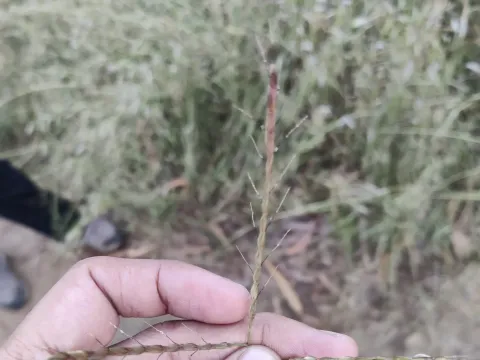
Thelepogon
Thelepogon
Thelepogon is a grass species primarily adapted to tropical climates with distinct wet and dry seasons. Sowing or germination typically occurs at the onset of the monsoon, triggered by the first significant rains and rising soil temperatures.
What the section contains

Thelepogon
The seeds require a moist seedbed to successfully sprout. In wild populations, seed dispersal occurs naturally as mature seeds drop to the ground, waiting for the necessary environmental signals to initiate growth.
When considered for cultivation, shallow planting is essential. The small size of the seeds limits the depth from which they can emerge, necessitating careful site preparation to ensure optimal soil-to-seed contact.
Growth rates are highly dependent on the stability of the rainy season. Young seedlings develop quickly, establishing a robust root system to survive the inevitable shift to drier conditions later in the year.
Agricultural timing involves tracking the start of the wet season, as planting too early or too late can lead to poor establishment or seedling mortality due to moisture fluctuations.
Belonging to the Poaceae family, Thelepogon thrives in open, sunny environments. It is a light-demanding species, often dominating grasslands that are not shaded by dense forest canopies.
It displays remarkable flexibility regarding soil types, performing well on loamy textures that provide decent aeration. It is, however, highly sensitive to stagnant water, which can trigger root rot.
The climate requirements center on high temperatures and reliable precipitation during the growing phase. It is not cold-tolerant and will cease growth if temperatures drop significantly below the tropical average.
Adequate availability of nitrogen and phosphorus is vital for producing a lush, green biomass. These nutrients support the plant's metabolic processes during the rapid growth phase of the wet season.
Proper drainage is the most critical management factor. Sloped terrain or well-structured soil profiles are ideal for preventing the saturation of the root zone during intense tropical rain events.
The biomass yield of Thelepogon is primarily influenced by the total volume of rainfall and the nutrient status of the soil. When managed correctly, it provides substantial forage for local livestock.
As a forage crop, its nutritional value is at its peak during the vegetative stage. Before the plant directs its energy toward flower and seed production, the stems are soft and highly digestible for grazing animals.
Yield estimation is often complicated by the plant's growth in diverse grasslands. In controlled plots, researchers measure dry matter accumulation to determine the optimal harvest timing for maximum protein content.
Overgrazing poses a significant risk to yield sustainability. If livestock are allowed to graze the plants too low or too frequently, the plant may lose the energy stores needed for regeneration.
Sustainable yield management involves rotational grazing strategies, which allow the plant to recover and photosynthesize effectively, ensuring consistent biomass production throughout the season.
While relatively hardy, Thelepogon is susceptible to fungal pathogens if humidity remains excessive for prolonged periods. Rust or leaf spot diseases can develop under poor airflow conditions.
Insect pests, particularly stem borers, can impact the growth of the plant by feeding on the internal tissues of the stem. This damage can stunt the plant's development and reduce its yield potential.
Invasive weed species represent a major competitive threat. If these weeds are not managed, they can outcompete Thelepogon for sunlight and soil nutrients during the critical early growth phase.
Root rot is the most common physiological threat caused by poor site selection. Prolonged soil saturation leads to oxygen depletion in the rhizosphere, causing rapid plant decline.
Integrated pest management, including regular field monitoring and maintaining optimal plant density, is essential to minimize these threats and protect the long-term health of the crop.
Harvesting Thelepogon for hay requires precise timing. The goal is to cut the grass before it enters the reproductive stage, ensuring the forage remains tender and rich in nutrients.
Drying the harvested material is a critical step that must be done carefully. Rapid moisture loss under direct sunlight is preferred, but excessive drying can lead to a loss of essential nutrients and palatability.
Seed harvesting occurs once the plant has fully matured. The seeds should be collected when the panicles turn a characteristic color, indicating that the grain is ready for dispersal.
Manual harvesting techniques are often used in the regions where Thelepogon grows naturally. This is due to the often uneven terrain where large machinery cannot operate effectively.
Storage of the final product requires a dry, well-ventilated area to prevent mold growth. Proper storage ensures that the hay remains a high-quality food source for the dry season.