
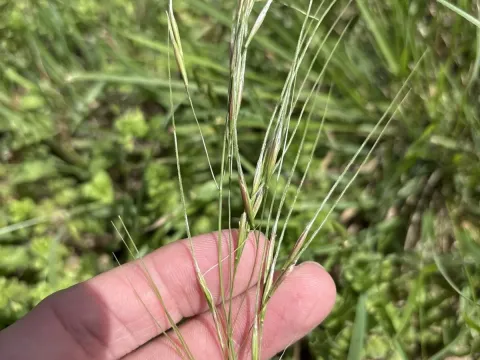
Texas needlegrass
Stipa leucotricha
Texas needlegrass (Stipa leucotricha) is a perennial grass belonging to the Poaceae family. It is a highly resilient species primarily native to North America, widely recognized for its adaptability to harsh environments and challenging soil conditions.
What the section contains
Texas needlegrass
This species naturally inhabits prairies, open woodlands, and rocky slopes. Its ability to thrive in poor, rocky, or sandy substrates makes it an excellent candidate for land reclamation projects and soil erosion control programs in arid and semi-arid regions.
Regarding climatic requirements, Texas needlegrass is exceptionally drought-tolerant. It has evolved to survive extended dry spells by developing a deep and robust root system, allowing the plant to extract moisture from deeper soil horizons where other grasses fail.
Optimal growth conditions involve full sun exposure and excellent soil drainage. The plant is intolerant of waterlogging, which can lead to rapid root degradation. Soil structure should promote aeration to ensure that the root system remains healthy throughout the growing season.
In terms of agricultural utility, it serves as a component of range management systems. It provides early-season forage for livestock and wildlife, though its nutritional value peaks before the seed heads fully mature, as the plants become increasingly fibrous over time.
The primary threat to the stability of a Texas needlegrass stand is improper soil management, specifically excessive irrigation or poor drainage. These conditions significantly increase the risk of crown and root rots, which are the most common pathological issues.
Insect pests such as grasshoppers and mites can occasionally reach damaging levels, particularly during hot and dry summers. These pests can stress the plants by feeding on leaf tissue, thus reducing the overall vigor and reproductive output of the stand.
Effective management includes implementing a controlled grazing strategy to prevent overgrazing. Overgrazing can deplete the plant's carbohydrate reserves stored in the roots, reducing its ability to recover and making it susceptible to secondary environmental stresses.
Weed competition is a significant concern during the establishment phase. As a relatively slow-growing perennial from seed, Texas needlegrass requires a weed-free seedbed or careful inter-row cultivation during its first year to avoid being outcompeted by aggressive weeds.
To minimize disease outbreaks, it is advised to avoid heavy fertilization, which may encourage succulent growth that is more prone to pathogens. Regular scouting and maintaining appropriate plant density are key practices for sustainable management.