
Texas millet
Urochloa texana
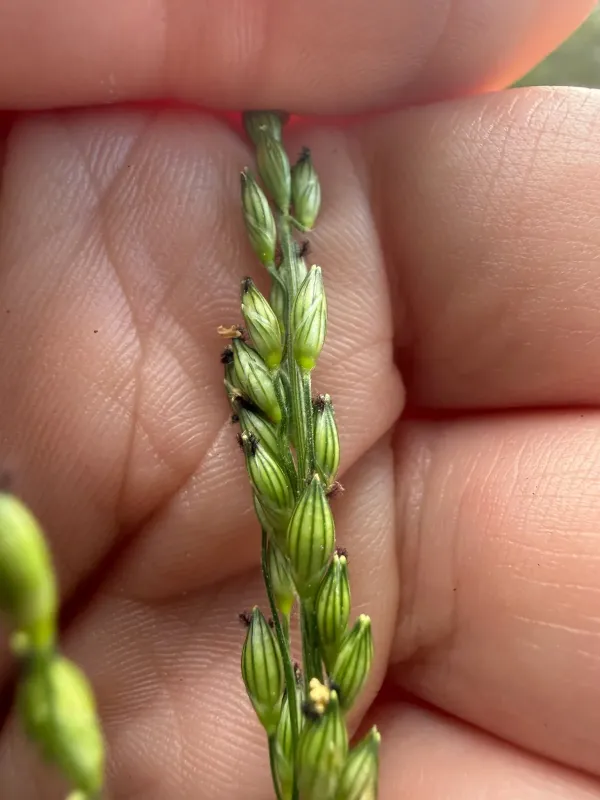
Description
Sowing dates
Texas millet is a warm-season annual grass typically sown in late spring once the soil temperatures have consistently risen. The planting time must coincide with the beginning of the active growth period for heat-loving crops to ensure rapid establishment.
Successful germination requires stable and warm environmental conditions. If sowing is delayed, the crop may struggle with the peak heat of summer, which can limit its initial root system development and overall biomass accumulation.
Seeding rates depend on the chosen planting method and the target density for the field. It is advisable to use high-quality, certified seed with strong vigor to ensure a uniform stand, which is critical for competing against early-season weeds.
The optimal seeding depth is shallow, usually between 1 to 2 centimeters. Proper soil contact is essential for moisture uptake; however, planting too deep may result in weak emergence, while sowing too shallow leaves seeds vulnerable to rapid drying.
A well-prepared seedbed is fundamental for Texas millet. The soil should be finely granulated and free from existing vegetation to reduce competition for light, water, and nutrients during the sensitive establishment phase.
Growing requirements
Belonging to the Poaceae family, Texas millet is well-adapted to hot, sunny climates. It thrives during the heat of summer and is notably resilient in regions where other cool-season forage grasses might struggle due to thermal stress.
The plant prefers well-drained soil types, including sandy loams and loamy soils. While it exhibits decent drought tolerance, its biomass potential is significantly maximized when there is a consistent supply of moisture during its primary growth stages.
Texas millet is versatile regarding soil pH, generally performing best in neutral to slightly alkaline environments. Its biological structure is designed to capitalize on high levels of sunlight, making it highly productive in open, unshaded fields.
Agricultural management should prioritize adequate nitrogen fertilization. Texas millet responds aggressively to nutrient inputs, particularly during the vegetative growth and tillering phases, leading to superior forage quality and volume.
The crop does not tolerate significant competition from weeds. Proper land management, including pre-plant weed control, is essential to ensure that the millet captures the necessary nutrients and light to reach its yield potential.
Yield
The yield of Texas millet varies widely based on soil fertility, management practices, and local rainfall levels. Under intensive cultivation, it can produce substantial forage volume in a relatively short period compared to other annual grasses.
When used for grazing, yield is measured by the amount of palatable biomass available to livestock. The plant has excellent regrowth characteristics, allowing for multiple grazings or harvests throughout a single growing season if managed correctly.
Nutrient concentration within the stems and leaves is highest before the onset of the reproductive (flowering) phase. Delayed harvesting results in a significant decline in nutritional value, as the plant becomes stemmier and higher in fiber content.
Achieving maximum yield requires maintaining an optimal plant population across the field. Thin or patchy stands prevent the crop from capturing the maximum amount of sunlight and soil nutrients, ultimately reducing the total dry matter per hectare.
Supplementary irrigation during critical periods can dramatically increase dry matter output. In nutrient-rich soils, the growth rate is often explosive, frequently outcompeting or outproducing native grasses in the same region.
Main diseases and pests
The primary threats to Texas millet include various insect pests that feed on young, succulent leaves or sap. Regular scouting is essential to identify early infestations before they lead to widespread damage or reduced vigor.
Fungal diseases, such as leaf spot, can become problematic in high-humidity conditions or areas with poor air circulation. These pathogens often cause premature senescence of the foliage, directly reducing the total forage quality and quantity.
Weed management remains the most significant challenge. Invasive weeds compete aggressively with the millet for water and light, often slowing the crop's development so much that it becomes unproductive. Early-season control is critical.
Implementing a proper crop rotation strategy helps manage soil-borne pathogens and prevents the build-up of specific pest populations. Avoiding continuous monoculture with other related Poaceae species is a recommended best practice for long-term health.
Farmers should monitor for signs of nutritional deficiencies which can make the plants more susceptible to opportunistic diseases. Balanced fertility management is the first line of defense against many biotic and abiotic stressors.
Harvesting
Harvesting Texas millet for hay or green chop should occur before the seeds reach maturity to preserve optimal protein levels and digestibility. Harvesting at the late vegetative stage ensures a high-quality product for livestock consumption.
Mechanized equipment should be calibrated to maintain an appropriate cutting height. Ensuring that the crown and basal nodes remain intact is vital for the plant to regenerate growth for subsequent harvests or grazing cycles.
For seed production, the harvest must occur once the panicles have reached full physiological maturity. Because the seeds are prone to shattering, timing is critical to minimize losses during the harvesting process.
Post-harvest handling of seeds requires thorough drying to reach safe moisture levels for storage. Seeds should be kept in cool, dry, and well-ventilated areas, protected from pests like rodents or weevils to maintain germination rates.
In grazing scenarios, a rotational system is highly recommended. This practice allows animals to consume the most nutritious portions of the plant while granting the millet enough recovery time to restore carbohydrate reserves in the root system.