
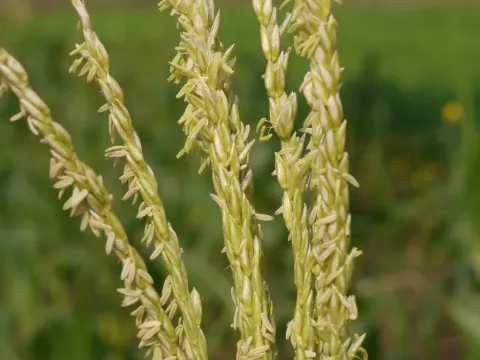
Teosinte
Zea mexicana
Teosinte is a warm-season grass, so sowing must be carried out only after the soil has warmed up to at least 12–15 degrees Celsius at planting depth.
What the section contains
Teosinte
In its native habitat, sowing naturally aligns with the onset of the rainy season, which ensures robust germination and root development before the peak of summer heat.
When cultivated in other regions, it is crucial to maintain proper plant spacing, as teosinte exhibits strong tillering capabilities requiring more area than domesticated maize.
The standard seeding depth ranges from 4 to 6 centimeters, adjusted according to the soil texture and its moisture levels at the time of planting.
Adhering to these sowing schedules allows the crop to complete its growth cycle effectively before the first autumnal frosts, to which the plant is highly sensitive.
Belonging to the Poaceae family, Teosinte serves as the closest wild relative to modern maize, dictating its specific environmental and soil requirements.
The plant thrives in fertile, well-drained loamy soils with a neutral or slightly acidic pH, provided they are rich in organic matter.
Teosinte displays superior drought resistance compared to domesticated varieties, yet it requires steady moisture levels to produce maximum vegetative biomass.
High solar intensity and long day lengths are essential for proper development, reflecting its evolutionary origin in tropical and subtropical climates.
Agricultural management must prioritize weed control during the early stages, as teosinte exhibits relatively slow initial growth compared to other fast-growing grasses.
In agricultural practice, teosinte is highly valued as a high-yielding green forage crop, capable of producing multiple cuts within a single growing season.
Biomass yields can reach impressive levels under favorable conditions, often competing with high-quality sorghum varieties, especially when managed with adequate fertilization.
A unique biological feature of teosinte is its rapid regeneration after harvesting, making it an excellent resource for rotational grazing or green-chop feeding systems.
The nutritional content, including protein and sugar levels, remains high even in later growth stages, significantly increasing its value as high-quality silage fodder.
Unlike domesticated corn, teosinte produces numerous small inflorescences rather than large ears, making it unsuitable for grain-focused farming operations.
Teosinte is susceptible to pests commonly affecting the Zea genus, such as the European corn borer, which can significantly compromise stalk integrity.
The crop is vulnerable to various fungal diseases, including leaf blights and rusts, especially in regions with high humidity and poor air circulation within the canopy.
To mitigate phytopathological risks, crop rotation is essential, and it is advisable to avoid planting teosinte near commercial cornfields to prevent cross-contamination.
Viral infections transmitted by aphids can lead to leaf deformation and stunted growth, necessitating timely insecticide applications if infestations reach critical thresholds.
- Cutworms (larval damage to foliage).
- Fusarium species (root and stalk rot).
- Common smut (fungal infection).
Harvesting for green forage typically begins at the onset of the flowering stage, when the nutrient profile of the stalks is at its peak.
For silage production, harvesting is delayed until later stages to ensure the plant has accumulated sufficient dry matter for an efficient fermentation process.
Mechanical harvesting is conducted using forage harvesters set at specific cutting heights to stimulate vegetative regrowth from the lateral shoots.
Hay production requires prolonged wilting in windrows due to the plant's naturally high moisture content and the fibrous structure of its stems.
It is imperative to complete harvest operations before the first frost, as exposure to freezing temperatures rapidly degrades the forage's quality and palatability.