
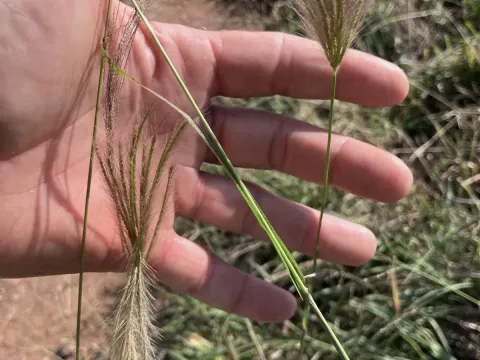
Tetrapogon
Tetrapogon
Tetrapogon is a genus of grasses in the Poaceae family, known for its exceptional resilience in arid and semi-arid regions. It serves as a vital forage crop for livestock in challenging environments where moisture is scarce.
What the section contains


Tetrapogon
Sowing typically occurs at the onset of the rainy season to capitalize on available moisture for seed germination. Farmers in tropical zones monitor local rainfall patterns closely to determine the precise timing for field preparation and seeding.
Seeds are sown at a shallow depth of 1–2 centimeters, ensuring they are covered just enough to be protected from wind while remaining within reach of light for quick emergence. Uniform distribution is key to establishing a productive sward.
After germination, the grass grows rapidly, forming a dense root system that secures the soil. This quick establishment is a key survival strategy in environments where the rainy season is short and unpredictable.
Optimal temperatures for growth range between +25 and +30 degrees Celsius. Under these conditions, Tetrapogon exhibits high vigor, allowing it to outcompete ephemeral weeds and establish a strong foothold in the landscape.
Tetrapogon is uniquely adapted to high-temperature environments and long periods of water scarcity. Its physiological mechanisms enable it to continue photosynthesis under heat stress, a trait that makes it superior to many other forage grasses.
The plant thrives in well-drained sandy or rocky soils, which are common in its natural habitats. It is highly sensitive to waterlogging, so it is essential to avoid low-lying areas where water may pool after heavy rainfall.
Full sun is a critical requirement for this species. Any form of shading from trees or structures will lead to stunted growth and reduced forage quality, making open fields the only suitable choice for cultivation.
Although Tetrapogon is not highly demanding regarding soil nutrients, it responds well to moderate fertilization, especially in soils that have been depleted by overgrazing or poor management practices.
Its ability to tolerate saline conditions is a major advantage for farmers managing degraded land. The plant not only survives in such environments but also helps in soil stabilization and the prevention of erosion.
Rust diseases are the primary fungal threat to Tetrapogon, particularly during periods of high humidity. Maintaining adequate spacing between plants and ensuring good air circulation are the most effective preventive measures.
Insect pests, including grasshoppers and various caterpillar species, can cause significant damage to the foliage. Integrated pest management strategies are often required to control population surges in large pastures.
Root rot is a major risk factor if the soil remains waterlogged for extended periods. Proper site selection and land preparation to ensure effective drainage are the best safeguards against this issue.
While the plant is hardy, it is susceptible to being overgrown by parasitic plants if the overall stand is weak. Keeping the stand healthy through proper grazing management ensures that the grass remains competitive.
Regular maintenance, such as controlled burning or mowing in some ecosystems, helps clear away dead debris and prevents the buildup of pathogens, promoting a fresh and nutritious re-growth for livestock.