
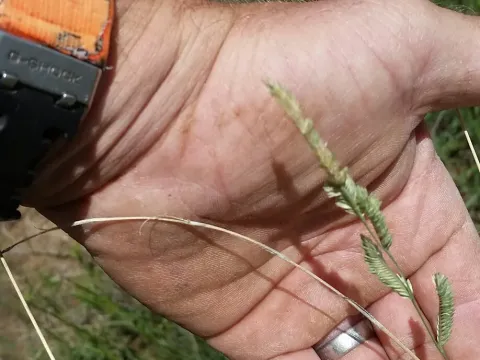
Tetrachne
Tetrachne
Sowing of Tetrachne is usually planned during periods with the most favorable moisture supply, which, in the natural range of the plant, corresponds to early spring. The seeds have good germination rates but require fine-structured seedbed preparation to ensure high-quality soil contact.
What the section contains

Tetrachne
An important condition is the sowing depth: it should not exceed 1–2 centimeters to avoid hindering the germination of small seeds. The optimal sowing method is row seeding with spacing up to 20 cm to provide each plant with sufficient space for nutrient uptake.
During the first weeks after emergence, the crop develops slowly, so it is extremely important to protect it from weeds that can inhibit young seedlings. The use of herbicides is permissible only after the plants have developed a sufficient amount of vegetative mass.
The stand density should be sufficient for the grass to form a closed canopy by the second year, which allows the crop to suppress competitive flora on its own. The recommended seeding rate is calculated based on the weight of 1000 seeds and the specific soil and climatic conditions of the site.
If overseeding into an existing stand is necessary, disc drills are used to ensure minimal disturbance of the sod. Tetrachne adapts well to grazing conditions if the initial root system establishment stage is properly managed.
Tetrachne is a perennial herbaceous grass belonging to the Poaceae family. In the wild, the crop is most often found in the regions of Southern Africa, where it has adapted to specific climatic cycles with alternating dry and wet seasons.
The plant prefers well-drained, loamy, or sandy soils with a neutral or slightly acidic pH level. It shows high tolerance to nitrogen deficiency in the soil, although it responds positively to moderate applications of phosphorus and potassium fertilizers.
The crop demonstrates moderate drought tolerance, making it promising for regions with limited rainfall. However, maximum biomass productivity is achieved with regular moisture during the active spring growth phase.
Botanically, the species is characterized by the formation of dense tussocks, which helps protect the soil from erosion. The leaf blades are stiff, adapted to intense solar radiation, and the root system penetrates deeply into the soil profile to store moisture.
The temperature range for optimal photosynthesis is between 20–28 degrees Celsius. The plant can withstand short-term frost, but during prolonged freezing temperatures, it enters a dormant state, shedding its vegetative mass.
Agricultural use of Tetrachne is mainly aimed at establishing pastures and hayfields in arid zones. The crop is valued for its stable green mass yield, which retains nutritional value even at the onset of drought periods.
Under intensive grazing conditions, Tetrachne shows high resistance to trampling due to the development of powerful tillering nodes. Livestock readily consume this grass until the stems begin to harden.
To maximize hay harvest, mowing should be carried out before the full flowering phase, when the protein concentration in the leaves reaches its peak. Regrowth after mowing occurs quite rapidly if there is sufficient moisture in the soil.
The crop does not belong to the high-intensity category but provides a stable supply of fodder units in areas where growing more demanding grasses is economically unfeasible. Tetrachne can be a component of grass mixtures with legumes.
The crude protein and fiber content in dry matter allow the plant to be used as a basis for the ration for cattle and sheep. Proper grazing management ensures the longevity of the stand for 5–7 years.
Like many other members of the Poaceae family, Tetrachne can be susceptible to typical fungal diseases of grasses, such as rust and powdery mildew. The development of pathogens is most likely during periods of high air humidity and moderate temperatures.
Control of infectious diseases is based on maintaining a proper grazing regime and periodic mowing, which prevents the accumulation of old plant material and excessive humidity in the root zone. Fungicides are used rarely and only in seed-production fields.
Among pests, the greatest danger is posed by insects that damage the tillering nodes and foliage, such as grain beetles or certain aphid species. Monitoring pest populations is conducted during the spring tillering phase.
Root rots can occur due to waterlogging on heavy clay soils, leading to thinning of the stand. It is important to ensure proper drainage of the area to prevent stagnant rainwater.
In general, the crop possesses a natural immunity that, under proper agricultural practices, allows for the avoidance of chemical protection measures. Prevention consists of maintaining high plant growth intensity through competent fertilizer management.