
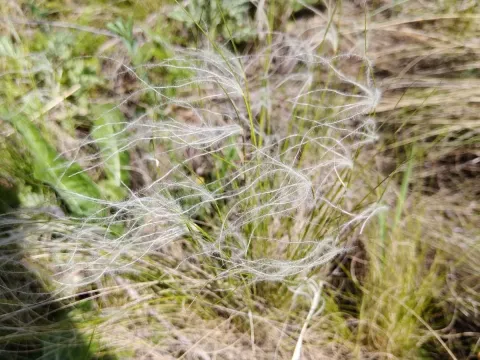
Lessing's needle grass
Stipa lessingiana
Lessing's needle grass (Stipa lessingiana) is a perennial grass belonging to the Poaceae family. It is a key species of the Eurasian steppe ecosystem, well-known for its resilience in harsh, arid, and semi-arid environmental conditions.
What the section contains
Lessing's needle grass
The plant exhibits remarkable drought tolerance due to its deep root system and narrow leaves, which effectively reduce transpiration. It thrives in open, sunny locations with minimal canopy cover and high solar exposure.
Soil requirements for this species include well-drained, nutrient-rich soils such as chernozems or chestnut soils. It performs poorly in waterlogged areas, as it requires a high degree of aeration in the root zone to prevent fungal infections.
Botanically, Stipa lessingiana forms dense tussocks that protect the soil from wind and water erosion. This structural feature makes it an essential component for rangeland management and restoration of degraded grasslands.
In agriculture, its primary role is to serve as high-quality forage during early spring and late autumn. It is particularly valuable for sheep and cattle grazing in regions where other forage crops fail to survive the summer heat.
Overgrazing remains the most significant threat to the stability of Lessing's needle grass populations. Intensive livestock pressure prevents the plant from setting seed and weakens the perennial tussock structure.
Pest pressures include several species of grass-feeding insects, such as cereal flies and aphids, which can damage vegetative tissues. During outbreak years, these pests can significantly impact the biomass yield.
Fungal diseases like rust and powdery mildew may occur when humidity levels rise unexpectedly during the growing season. These infections can compromise the overall health and palatability of the grass.
Poor soil management, especially soil compaction caused by livestock hooves in wet weather, creates favorable conditions for root-related pathogens. This leads to stunted growth and thinning of the grass stands.
Successful management relies on implementing rotational grazing practices. Allowing rest periods for the grassland ensures the plant maintains its vigor, protects the soil, and sustains long-term productivity.