
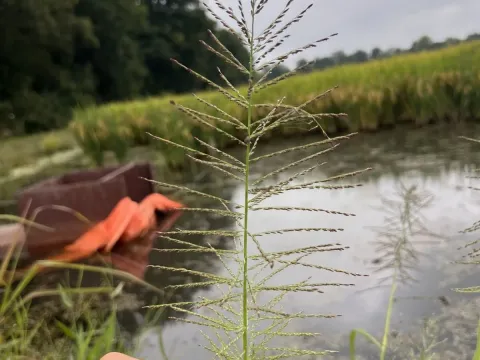
Leptochloa panicoides
Leptochloa panicoides
Leptochloa panicoides, commonly known as Amazon sprangletop, is an annual grass species belonging to the Poaceae family. It is recognized for its robust growth habit and its prevalence in tropical and subtropical regions, particularly in environments with high water availability.
What the section contains
Leptochloa panicoides
The native range of this species extends across North and South America. It is frequently observed in wetland habitats, riparian zones, and significantly, within irrigated agricultural systems such as rice paddies, where it acts as a vigorous competitor for resources.
Botanically, the plant features erect or ascending culms that can grow up to a meter in height. The foliage consists of flat, linear leaves, while the inflorescence is a panicle composed of numerous racemes, facilitating effective seed dispersal and colonization of moist soils.
The environmental requirements for Leptochloa panicoides include consistently moist to saturated soil conditions. It thrives in fertile, heavy-textured soils such as clays and loams that maintain high moisture levels throughout the growing season, showing excellent tolerance to waterlogging.
While often managed as a weed, its agricultural utility is limited to serving as a sporadic component of forage in grazing lands. Its ability to tolerate flooded conditions distinguishes it from many other grass species, making it a plant of interest in ecological studies of wetland flora.
The primary diseases affecting Leptochloa panicoides involve fungal pathogens, particularly those causing leaf spot and rust. These conditions are exacerbated by the humid environments in which the grass typically grows, leading to reduced photosynthetic efficiency.
Insect pests such as grass-feeding aphids and leaf miners are common threats to the plant's structural integrity. These pests extract nutrients from the stems and leaves, often causing stunted growth and increasing the plant's susceptibility to secondary infections.
Soil-borne pathogens, including various species of nematodes, can negatively impact the root system of the plant, especially in stagnant water conditions. This root stress limits the plant's ability to absorb water and nutrients, ultimately affecting its overall population density.
Management strategies in agricultural settings focus on cultural practices, such as water level management in paddies and mechanical removal. Chemical control is utilized primarily when the population exceeds economic thresholds in adjacent high-value crop fields.
Preventative measures include the use of clean seeds and crop rotation to disrupt the life cycles of pests and pathogens. Regular field scouting is essential to identify early outbreaks and mitigate the spread of diseases within the agricultural landscape.