
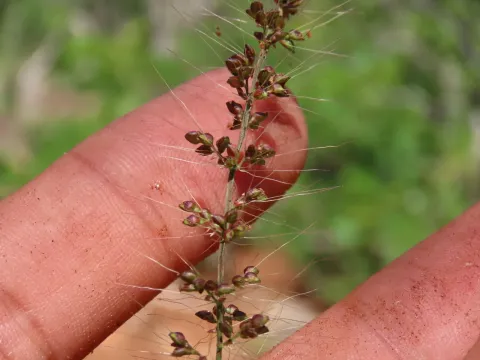
Liebmann's bristlegrass
Setaria liebmannii
Liebmann's bristlegrass is typically sown in the spring once soil temperatures reach 15–18°C, ensuring optimal seed germination vigor. In hot climates, early planting allows the crop to maximize the use of moisture stored in the soil during the winter season.
What the section contains
Liebmann's bristlegrass
Seeding rates are adjusted based on the intended use, whether for high-density forage production or seed multiplication. Standard row planting with spacing between 15 and 30 cm is usually employed to ensure even distribution of plants across the field.
Sowing depth is a critical factor, and it should not exceed 2–3 centimeters. Given the small size of the seeds, high-quality soil leveling and packing after sowing are essential to ensure firm contact between the seed and the moist soil matrix.
Agronomic management during the initial growth stage involves weed control, as the crop develops relatively slowly in its early seedling phase. Once the rows close, the plant becomes a competitive force, effectively suppressing most weeds in the field.
The time from sowing to emergence ranges from 7 to 14 days under favorable conditions. It is important to avoid over-irrigation during the germination phase to prevent the seeds from being affected by soil-borne pathogens.
The crop demonstrates high adaptability to arid conditions and can withstand prolonged drought periods due to its extensive root system. It prefers well-drained sandy or loamy soils with a neutral or slightly acidic pH level.
The optimal temperature range for active growth is between 25 and 35°C, making it an ideal candidate for regions with hot summers. The plant is highly sensitive to cold temperatures and ceases development immediately upon the arrival of autumn frosts.
The plant requires high levels of light exposure and does not tolerate shading from other crops or trees. Utilizing this species in crop rotation helps improve soil structure through the deep penetration of its root system.
Nitrogen fertilization during the active growing phase significantly increases biomass and the nutritional value of the forage. Split applications of fertilizer are recommended to ensure consistent nutrient availability throughout the growth cycle.
Belonging to the Poaceae family, it is closely related to common foxtail millets. It possesses excellent regrowth potential after mowing, allowing for multiple cuts within a single growing season.
The yield of green matter from Liebmann's bristlegrass directly depends on the level of agronomy and irrigation management during critical growth stages. With moderate irrigation, productivity levels can reach high yields comparable to other forage millet crops.
The biomass of this crop is characterized by high protein content, making it a valuable component of livestock rations. Early harvesting for green fodder ensures the highest concentration of essential nutrients.
To maximize seed production, it is necessary to wait until the panicles are fully mature, although one must manage the risk of grain shattering during delays in harvest. Harvesting for seeds is typically conducted when grain moisture is 14–16% or lower.
The average dry matter yield achieved with proper technology reaches several tons per hectare, making it economically viable for regions with limited forage resources. The crop responds well to micronutrient applications during the jointing stage.
When used as pasture, it is important to manage grazing intensity to avoid overgrazing, which can weaken the root system. Yield capacity recovers after a rest period, which should ideally be at least 3 to 4 weeks long.
Major threats to bristlegrass include various types of rust and smut fungi that attack the plant's reproductive organs. Prevention requires the use of treated seed and maintaining spatial isolation from wild-growing grasses.
Pests such as cereal aphids and various plant bugs can cause damage to young plants by extracting sap from the leaves. Pest monitoring should begin as early as the three-leaf stage to facilitate timely insecticide applications when necessary.
Damage to the root system by wireworms can lead to thin stands, especially in fields where perennial grasses were the previous crop. Agronomic control methods include deep autumn plowing prior to planting.
Excessive moisture in late summer creates a risk of mold development on the panicles, which degrades the quality of the seed stock. Ensuring good ventilation within the canopy by maintaining appropriate stand density is a key protective method.
An integrated pest management approach allows for effective control of pest populations and pathogen development without significant environmental impact. It is crucial to rotate fungicides with different modes of action to prevent the development of resistance.
Harvest timing depends on the intended use: for hay production, mowing is conducted at the onset of the heading stage. This phase achieves the optimal balance between biomass volume and nutritional quality.
When harvesting for silage, it is essential to ensure high-quality compaction of the mass to prevent fermentation spoilage. The high sugar content in the plant supports excellent fermentation processes, yielding high-quality preserved feed.
Mechanized harvesting requires the use of standard grain combines with appropriate adjustments to the threshing apparatus. Gentle handling of seeds is necessary to avoid mechanical damage that can occur at high drum speeds.
Post-harvest seed processing includes mandatory cleaning to remove chaff and debris, followed by drying to conditioned moisture levels. Storage of seed stocks is performed in dry, well-ventilated warehouses using bags or bulk storage.
Crop residues remaining after seed harvest can be utilized as roughage for livestock or incorporated into the soil as organic fertilizer. This practice contributes to soil carbon sequestration and improves overall soil physical properties.