
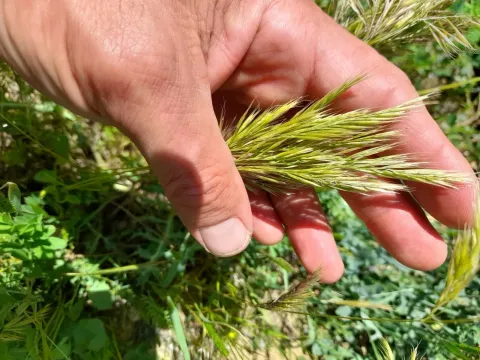
Ligurian fescue
Festuca ligustica
Ligurian fescue (Festuca ligustica) is a perennial grass species belonging to the Poaceae family. It is recognized for its adaptation to Mediterranean climates, where it thrives in regions with dry, warm summers and mild winters.
What the section contains
Ligurian fescue
The species prefers well-drained, lime-rich, or stony soils. Its botanical structure is characterized by dense tussocks and narrow leaves, which are structural adaptations for water conservation in arid environments.
Ligurian fescue is highly drought-tolerant, making it an excellent candidate for agricultural land that suffers from water scarcity. It does not tolerate waterlogging, requiring soils with excellent permeability.
Climatically, the plant thrives under high solar radiation and is resilient to the fluctuating temperatures typical of spring in its native range. It is often used in ecological restoration to prevent soil erosion on slopes.
Agronomic management involves minimal intervention once established. The species is valued for its ability to provide early spring growth, offering essential forage when other plants have not yet reached their peak vegetation stage.
Cereal rust diseases represent the most significant threat to Ligurian fescue, particularly under conditions of high humidity or poor air circulation. Proper management of grazing density is essential to maintain plant health.
Insect pests, including cereal flies and moths, may attack the plant during its active growth phases. Infestations can lead to stunted growth and reduced biomass, which is critical in commercial forage production.
Root rot fungi can affect the plant if grown in stagnant water or poorly drained soils. Farmers are advised to avoid over-irrigation and to ensure that the site selection meets the specific drainage needs of the species.
Competition from invasive weeds during the establishment phase is a common issue. Effective weed control in the first season is vital for the long-term success of the grassland stand.
Implementing integrated pest management practices helps to keep the crop healthy. Regular inspection of the field for early signs of pathogens or pest activity is recommended to minimize crop damage.