


Reference · Crops
Leymus
Leymus
Sowing of Leymus is primarily carried out in the spring, once the soil has warmed to 5–8 degrees Celsius, or in the autumn before winter.
5
items
What the section contains
Marketplace
Products in this section · 2
GYMADEN 'GREY URAL'
Ural Federal University named after B.N. Yeltsin
Wild Rye
0
0
No offers
—
Details
Leymus
The optimal planting depth on sandy soils is 3–4 centimeters to ensure sufficient moisture contact for the seeds during germination.
When establishing pastures, seeding rates are calculated based on seed viability and the chosen sowing method, typically utilizing drill seeding.
Consolidating the soil after seeding is a crucial step to improve capillary moisture movement, which significantly accelerates uniform emergence.
During the early stages of growth, the crop develops slowly, requiring diligent weed control to prevent competition for essential nutrients.
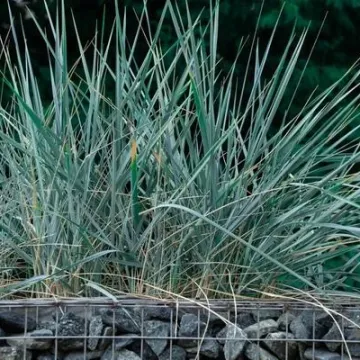
Leymus belongs to the Poaceae family and is recognized as a hardy, deep-rooted perennial grass species.
The plant exhibits exceptional ecological plasticity, thriving in saline, sandy, and marginal soils where other forage crops might struggle.
It is highly undemanding in terms of climate, showing excellent winter hardiness and the ability to withstand prolonged drought periods.
Leymus prefers open areas with full sun exposure, as it performs poorly under heavy shading or in waterlogged, stagnant conditions.
In its native range, the grass is highly valued for its ability to stabilize shifting sands, acting as an important environmental tool.
The yield of green biomass and hay varies significantly based on soil fertility levels and the level of management applied to the stand.
On productive sites with adequate fertilization, Leymus can generate between 3 to 5 tons of hay per hectare under optimal harvesting regimes.
Peak biomass production usually occurs during the second and third years, once the extensive rhizomatous root system has fully established.
Strategic application of nitrogen fertilizers in early spring helps to boost vegetative growth for high-quality livestock fodder.
The crop produces consistent seed yields, allowing producers to effectively manage their own seed stocks for future field expansions.
Leymus possesses high natural resistance to many common diseases that typically affect cultivated forage grasses in various regions.
During excessively wet seasons, fungal diseases such as leaf rust may occur, which can impact the quality of the foliage.
Pests typical for cereals, such as various beetles and flies, may occasionally infest stands, especially during periods of outbreak.
Effective management strategies include regular scouting and crop rotation to avoid the long-term buildup of specific pathogen populations.
Timely harvest and proper residue management contribute to the overall health of the field and minimize the presence of harmful insects.
Harvesting for hay should be timed with the heading stage, ensuring the plant retains peak protein and nutrient density.
Delaying harvest often results in stem lignification, which reduces digestibility and overall palatability for livestock consumption.
Cutting heights should be maintained at 5–7 centimeters to promote vigorous regrowth and sustain the stand over multiple years.
Cut material should be raked and baled once dried to ensure stable storage conditions and prevent spoilage in bales or stacks.
When managed as pasture, rotational grazing is essential to prevent overgrazing, which could jeopardize the plant's long-term survival.