
Letterman's needlegrass
Stipa lettermanii
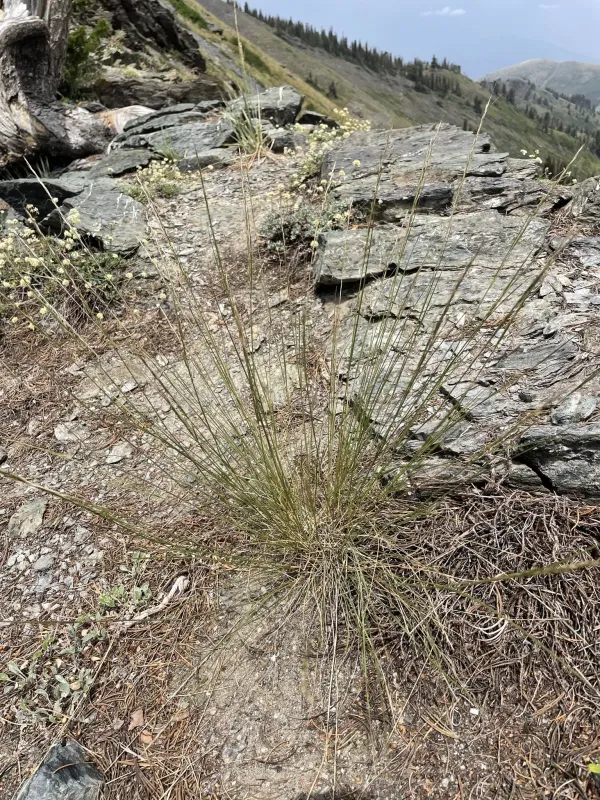
Description
Growing requirements
Letterman's needlegrass (Stipa lettermanii) is a perennial bunchgrass belonging to the Poaceae family. It is native to the western United States, primarily inhabiting mountainous regions where it thrives under diverse environmental pressures and rugged terrain conditions.
This species is highly adapted to well-drained, rocky, or gravelly soils, exhibiting a strong preference for upland habitats. Its biological design allows it to withstand significant temperature fluctuations and prolonged periods of drought, which are common in its natural range.
The plant requires full sun exposure to reach its maximum productive potential. It is sensitive to waterlogging and poor soil aeration, which can compromise its root health, so site selection should prioritize slopes or well-drained flats to ensure optimal growth conditions.
Growth of Stipa lettermanii is characterized by a deep and extensive root system. This allows the plant to access moisture from subsurface horizons, maintaining green tissue longer than many shallow-rooted forage species during the peak of the summer heat.
Establishment of this grass can be slow, requiring careful management during the seedling stage. Once established, however, the plant forms dense, persistent bunches that can withstand grazing pressure and competition, making it a reliable perennial component of native ranges.
Yield
Letterman's needlegrass is primarily utilized as a forage resource for livestock, including cattle and sheep. It provides highly palatable and nutritious forage during the early vegetative phase, supporting animal performance and weight gain on high-elevation rangelands.
The yield of this grass is typically measured by its ability to produce consistent biomass in areas where more sensitive crops would fail. It is an essential component of range improvement programs aimed at increasing the carrying capacity of marginal lands.
Beyond forage production, this species is valuable for soil stabilization and watershed protection. Its dense root structure helps prevent soil erosion on steep slopes, making it a preferred choice for land reclamation and post-mining site restoration projects.
When managed for hay, the timing of harvest is critical. Cutting should occur before the seed stalks become lignified. Early harvesting ensures that the nutritional value is preserved, resulting in higher quality feed that can be stored for winter use.
The species integrates well into diverse seed mixes. By planting Stipa lettermanii alongside compatible legumes or other grasses, land managers can create a complex pasture ecosystem that maintains productivity throughout the growing season.
Main diseases and pests
Stipa lettermanii is generally resistant to many of the common agricultural pathogens that affect cultivated cereal grains. Its natural adaptation to harsh, high-stress environments has provided it with a robust immune system against typical foliage diseases.
Pest pressure from insects, particularly grasshoppers, can occasionally impact biomass yield during dry seasons. Management of insect populations is necessary when densities exceed economic thresholds to prevent excessive loss of leaf material.
Invasive weeds pose the most significant threat to the successful establishment of new stands. Because the seedlings of Letterman's needlegrass grow relatively slowly, weed control measures such as mowing or selective herbicides are often required in the first two seasons.
Overgrazing during the plant's sensitive reproductive stage can lead to a decline in stand vigor. Proper grazing management, including rotational stocking, is essential to ensure that plants have sufficient time to recover and replenish carbohydrate reserves in the roots.
- Implement grazing rotations to prevent overutilization.
- Monitor for invasive species that compete for moisture and light.
- Ensure adequate rest periods for the plants after harvest or grazing.