
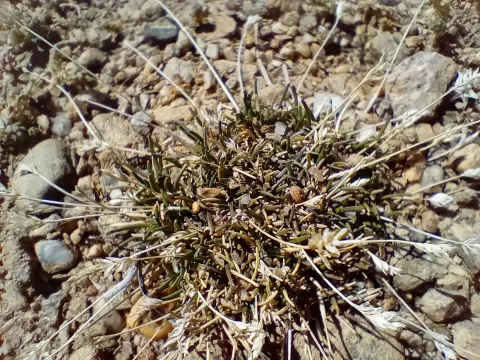
Maniototo bluegrass
Poa maniototo
Maniototo bluegrass (Poa maniototo) belongs to the grass family (Poaceae) and is a specialized species native to the unique landscape of New Zealand's South Island.
What the section contains
Maniototo bluegrass
This species is characterized by its low-growing habit and ability to form dense, compact tufts that are well-adapted to high-altitude and basin environments.
It thrives in well-drained, stony, or sandy soils, often found in alluvial plains where moisture availability is limited during the growing season.
The plant exhibits high tolerance for extreme temperatures, effectively surviving cold winters and hot, arid summers through specialized metabolic adaptations.
In terms of habitat, Poa maniototo plays a vital role in soil stabilization, helping to maintain the structure of fragile environments in the Maniototo basin.
The primary threat to Maniototo bluegrass is habitat loss resulting from land development and the conversion of native rangelands into intensive agricultural fields.
Overgrazing by introduced livestock significantly reduces the plant's ability to regenerate and maintain its dominance within the local grassland community.
Increased competition from invasive, fast-growing pasture grass species poses a major threat to the survival of this slow-growing native bunchgrass.
Soil-borne pathogens and root-feeding insects represent significant biological threats, especially when the plant is stressed by environmental factors.
Management practices, such as excessive irrigation or fertilization, negatively impact this species by altering the soil chemistry to which it is specifically adapted.