
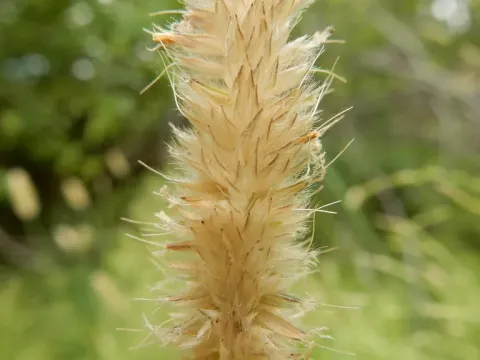
Magellanic foxtail
Alopecurus magellanicus
Magellanic foxtail is a perennial grass species from the Poaceae family, known for its extreme resilience and ability to thrive in cold, moist environments. It is a preferred crop in high-latitude and alpine regions where conventional forage grasses often struggle to establish or overwinter.
What the section contains
Magellanic foxtail
The optimal sowing time is in early spring when the soil starts to warm up but still retains sufficient moisture. Due to the small size of the seeds, they should be sown at a shallow depth of 1–2 cm, ensuring good contact with the seedbed to facilitate germination.
It is often integrated into complex seed mixtures to improve the productivity of pastures. Its ability to regenerate quickly after grazing or cutting makes it a valuable component for sustainable land management in challenging environments.
The seeding rate varies depending on the purpose, typically ranging between 8 and 12 kg per hectare for monoculture stands. Rolling the field immediately after sowing helps to ensure uniform germination and helps protect seeds from drying out.
Early weed control is critical during the establishment year. As the seedlings are relatively slow to develop in the first few weeks, keeping the area free of aggressive weeds will ensure the crop establishes a strong and dense root system.
This grass is a hydrophytic species, thriving best in moist to wet soil conditions. It is remarkably tolerant to occasional flooding, making it an excellent candidate for planting in low-lying areas, floodplains, or boggy soils where other crops might suffer from root suffocation.
It prefers fertile loam or peat soils with a neutral to slightly acidic pH level. The plant responds very well to nitrogen-based fertilization, which promotes lush vegetative growth and increases the overall nutritional quality of the forage.
Magellanic foxtail is exceptionally cold-hardy, capable of surviving severe frost and enduring low temperatures during the growing season. This trait makes it an ideal crop for alpine and arctic regions where the growing window is short and unpredictable.
While it has a moderate light requirement, it is best grown in open areas with full sun exposure. Shading from woody vegetation or tall structures can significantly limit the tillering capacity of the grass and reduce overall biomass production.
Water management is the key factor for successful cultivation. While the plant loves water, it still requires well-aerated soil; therefore, areas with completely stagnant water for extended periods should be avoided or provided with basic drainage.
Under optimal conditions, the yield of Magellanic foxtail can be very consistent, often providing two high-quality cuts per season. It is a highly productive grass that retains its nutritional value well into the late autumn.
Dry matter yields typically range from 3 to 5 tons per hectare, depending on soil fertility and moisture availability. The forage is known for its high leaf-to-stem ratio, making it palatable and digestible for both sheep and cattle.
Seed production requires careful monitoring, as the seeds tend to shatter easily once mature. Harvesting is best done when the lower parts of the panicle turn brown, ensuring a balance between high yield and minimal harvest loss.
As a pasture crop, it shows excellent longevity, often remaining productive for over 7 years without the need for reseeding. This longevity makes it an economical choice for long-term grassland management in remote and difficult terrains.
Regular maintenance, including light harrowing in the spring to remove dead thatch, is recommended to keep the stand productive and prevent the accumulation of old plant material, which could hinder new shoot development.
Magellanic foxtail is generally resistant to many common grass diseases, but it can be susceptible to rust and powdery mildew when grown in dense, poorly ventilated stands during humid weather. Maintaining proper spacing and aeration is key to mitigation.
Insect pests such as grass flies and gall midges can occasionally damage the generative organs and reduce seed yields. Integrated pest management, primarily through proper cutting schedules and field sanitation, is the standard approach to control.
Weed competition during the seedling stage is the most significant threat. If weeds are not managed, they can outcompete the foxtail for space and nutrients, leading to patchy and low-productivity fields in the long term.
Root rot can occur in areas with poor drainage and excessive moisture. While the plant is water-loving, constant saturation without oxygen exchange can weaken the plant's roots and make them vulnerable to soil-borne pathogens.
Chemical control is rarely necessary and often discouraged due to the crop's primary use as forage. Strict adherence to harvest intervals is recommended if any control measures are deemed necessary during the early stages of the growth cycle.
Harvesting for hay should occur at the heading stage before the formation of mature seeds. Cutting at this time ensures the highest protein content and prevents the forage from becoming too lignified and difficult for livestock to digest.
When making hay, it is important to dry the material thoroughly to avoid spoilage. Because the plant is leafy, it dries relatively quickly if turned regularly, maintaining its bright color and appetizing aroma for winter storage.
Pasture management should focus on rotational grazing. Allowing the grass to reach 20 cm in height before introducing livestock and stopping when it reaches 6 cm is the best way to encourage rapid regrowth and plant health.
Seed harvesting should be performed with a combine harvester set to low fan speeds to prevent the lightweight seeds from being blown out. Proper cleaning and drying of seeds after harvest are essential to ensure high viability for future seasons.
Post-harvest residues can be used as a supplementary feed source or as bedding for livestock. While lower in nutritional value than the early-cut hay, it still serves as a useful resource in farming systems where every bit of biomass is valued.