
Matthews' fescue
Festuca matthewsii
Description
Growing requirements
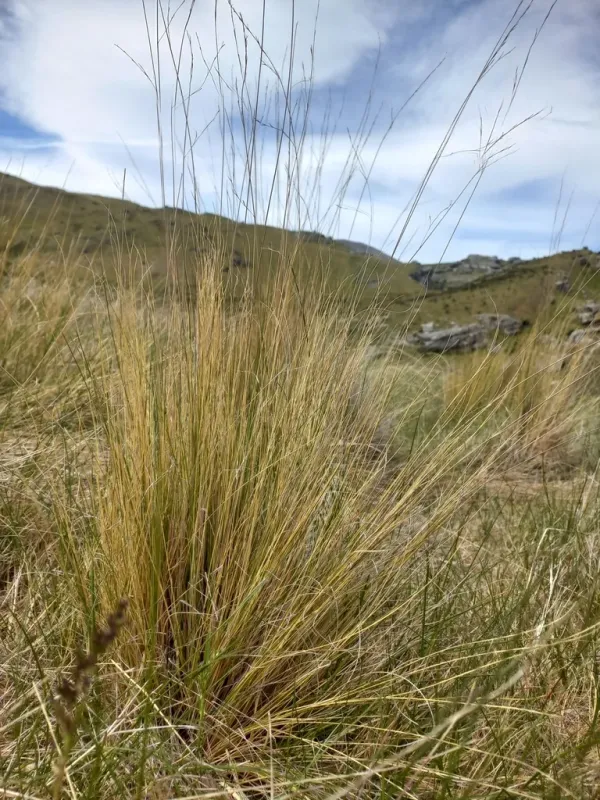
Matthews' fescue (Festuca matthewsii) is a perennial grass species within the Poaceae family. It is a native plant endemic to New Zealand, specifically adapted to high-altitude and subalpine environmental niches where survival depends on resilience.
The plant thrives in well-drained, stony, or rocky soils, which are typical of its natural habitat. It displays a remarkable ability to survive in nutrient-poor environments, making it a robust species for conservation and soil stabilization projects.
Botanically, this grass forms dense tussocks, an evolutionary trait that provides protection against harsh wind and thermal fluctuations. The leaves are typically narrow and stiff, reducing transpiration during periods of high solar radiation.
Regarding cultivation, it requires full sun exposure and is intolerant of shading by taller, more aggressive grasses. Because of its specific ecological niche, it is rarely cultivated as a mass crop, but it is valued in specialized revegetation of mountainous terrains.
As a forage source, it provides moderate nutrition for grazing animals, although its slow growth rate makes it less suitable for high-intensity commercial pasture rotations compared to more productive introduced species.
Main diseases and pests
The primary diseases affecting this species are fungal rusts, which thrive in humid and poorly ventilated conditions. These pathogens can significantly reduce the vitality of the plant by draining its photosynthetic resources.
Common insect pests include various species of aphids and subterranean larvae that target the roots of the tussocks. In stable, mature ecosystems, predatory insects and parasitic wasps usually help keep pest populations within tolerable limits.
Root rot represents a major physiological threat if the soil structure becomes compacted or waterlogged. Proper site selection and drainage are critical to preventing these soil-borne pathogens from compromising the health of the clump.
Excessive grazing pressure can also act as a threat, weakening the plant's carbohydrate reserves and making it susceptible to secondary infections or winter damage. Careful management of grazing cycles is essential in regions where it is utilized.
Monitoring for foliar spots or yellowing during the spring and autumn months is recommended to catch early signs of disease outbreaks before they can spread throughout the stand.