
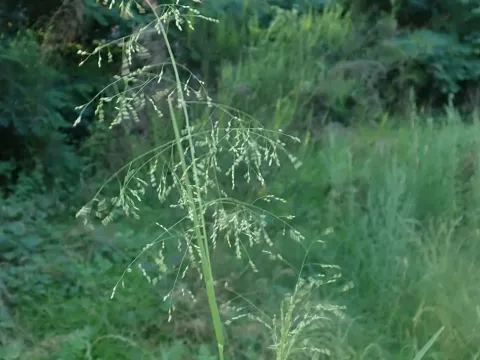
Schinz's millet
Panicum schinzii
Schinz's millet is an annual herbaceous plant belonging to the Poaceae family. Sowing is recommended once the soil has warmed up, ideally reaching temperatures of 12–15 degrees Celsius in the top layer to ensure rapid germination.
What the section contains
Schinz's millet
The ideal window for planting in temperate climates falls in the second half of May. Early sowing into cold soil often leads to delayed emergence and poor stand density across the field.
Seed rates vary depending on soil fertility and the intended use of the crop. For green forage production, higher seeding densities are preferred with 15 cm row spacing, which helps to naturally suppress weed growth during the early developmental stages.
The planting depth should be strictly limited to 2–3 centimeters. When working in lighter sandy soils, seeds may be placed slightly deeper to ensure adequate moisture contact and prevent the germinating radicle from drying out prematurely.
After sowing, rolling the field is strongly recommended to optimize soil-to-seed contact, facilitating even emergence. Utilizing precision planters further improves the overall success and productivity of the established stand.
This crop exhibits high adaptability to various soil profiles, including nutrient-poor and slightly saline substrates. It performs best in light, sandy-loam soils that offer excellent drainage and aeration.
Schinz's millet is highly drought-tolerant, capable of withstanding prolonged dry spells without significant loss in biomass quality. High thermal conditions generally favor its growth rate and total accumulation of plant matter.
The optimal pH range for this species is between 5.5 and 7.5. The crop is sensitive to waterlogging and high groundwater tables, which can predispose the root system to fungal pathogens and decay.
Abundant sunlight is a critical requirement throughout the growing season. In shaded environments, the plants tend to become spindly, prone to lodging, and overall yield potential is significantly compromised.
Agronomic management requires modest nitrogen applications during the early vegetative phase to promote tillering. Excessive nitrogen fertilization should be avoided as it may encourage stem growth at the expense of grain development or forage quality.
Yield performance of Schinz's millet is contingent upon moisture availability and overall field management. When requirements are met, it produces a reliable crop valued in livestock production as a source of roughage.
Under irrigation, biomass production can increase by 1.5 to 2 times compared to dryland cultivation. Given its vigorous tillering capacity, the crop can support multiple harvests per season with proper nutrient replenishment.
The dry matter yield provides significant nutritional density, making the harvest highly suitable for hay production. The chemical profile of the biomass is rich in carbohydrates and proteins, contributing to superior animal feed quality.
Effective weed management is essential for optimizing yield, as competing species can limit access to moisture and nutrients. However, after the tillering phase, the millet stand typically gains high competitive ability against weeds.
Data suggests that the biological potential of this millet is fully realized when consistent daytime temperatures exceed 20 degrees Celsius during the phase of active stem elongation.
The plant possesses inherent resistance to many common cereal diseases. Nevertheless, strict crop rotation should be practiced to prevent the buildup of soil-borne pathogens like root rots and foliar rusts.
Key pests include cereal flies and aphids, which may cause damage to young seedlings in early summer. Integrated pest management using selective insecticides should be applied only when economic injury levels are surpassed.
Lodging remains a significant concern in cases of excessive moisture or overcrowding, which can encourage mold development in the lower foliage and diminish the market quality of the harvested feed.
Preventative strategies should prioritize proper rotation schedules, high-quality seed treatments, and regular field monitoring. Affected areas require prompt sanitization or targeted management to prevent wider spread.
Growers should monitor for invasive grass weeds that share similar biology with Schinz's millet. The use of selective herbicides during the early vegetative stages is a common strategy to minimize resource competition and prevent harvest losses.
Harvesting for green forage should be completed before the plants initiate flowering. At this stage, nutrient concentration in the stems and leaves is at its peak, ensuring maximum digestibility for livestock.
When producing hay, mowing should be followed by wilting in windrows. It is crucial to manage the drying process carefully to prevent excessive leaf shatter, which would lead to a significant loss of nutritional value.
For seed production, harvesting is conducted during the stage of full wax maturity. At this time, the panicles display a characteristic color, and the moisture content of the grain decreases to approximately 14–16 percent.
Seed harvesting technology relies on combine harvesters with precise adjustments to the threshing mechanism. Reducing drum speed is vital to avoid cracking the grains and to preserve their long-term germination viability.
Post-harvest conditioning includes mandatory drying and cleaning to remove impurities. Properly processed seeds of Schinz's millet maintain high viability for 3–4 years if stored in cool, dry, and well-ventilated conditions.