
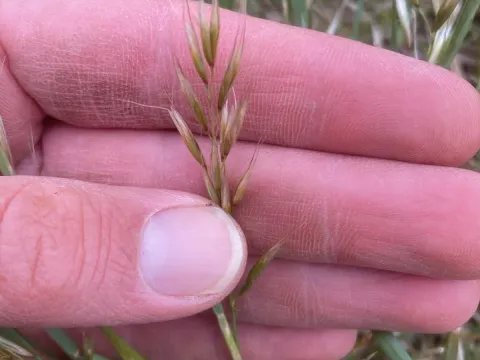
Schell's oat-grass
Helictotrichon schellianum
Helictotrichon schellianum, commonly known as Schell's oat-grass, is a perennial grass species belonging to the Poaceae family. This species is native to Eurasia and plays a significant role in ecological restoration and the maintenance of productive meadow ecosystems.
What the section contains
Schell's oat-grass
Botanically, it is characterized by its rhizomatous root system and narrow, stiff leaves, which contribute to its drought tolerance. The species is highly adapted to temperate climates, exhibiting excellent winter hardiness and steady spring growth development.
Soil requirements for optimal growth include well-drained loamy or sandy-loam substrates with adequate aeration. While it can survive in nutrient-poor soils, fertilization with nitrogen and phosphorus is essential to maintain high biomass yields in intensive agricultural settings.
Management practices should prioritize sustainable grazing or mowing intervals. As a long-lived perennial, it demonstrates high persistence when managed with rotational grazing systems, preventing depletion of root reserves during the summer growth peak.
The primary agricultural utility of Helictotrichon schellianum is its use in high-quality hay production and as a vital component of permanent pastures. Its forage quality is highly valued, as the grass maintains its nutritional profile well into the maturation phase.
The sowing phase should take place in early spring when soil temperatures reach stable levels. Precise drilling at a shallow depth promotes uniform germination, which is critical for establishing a dense and healthy stand of grasses from the outset.
Harvesting for forage should be timed at the boot to early heading stage. This approach balances the total volume of biomass with the nutritional quality required for balanced livestock diets, ensuring high digestibility and protein content.
The culture is generally resilient to pests. However, during periods of high humidity, it can be susceptible to foliar diseases such as leaf rusts. Maintaining proper stand density and avoiding over-fertilization are key measures to mitigate these risks effectively.