
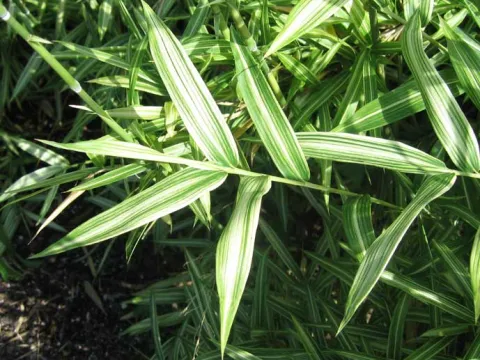
Sasaella
Sasaella
Sasaella is a genus of perennial evergreen grasses belonging to the Poaceae family, specifically the Bambusoideae subfamily. In agriculture and landscaping, this plant is valued as a hardy bamboo capable of adapting to various environmental conditions.
What the section contains

Sasaella
The natural habitat of this plant is concentrated in East Asia, primarily Japan. Sasaella is widely cultivated in regions with temperate and subtropical climates due to its ability to withstand short-term temperature drops.
The plant prefers well-drained, fertile loamy soils with a neutral or slightly acidic pH. A key condition for successful growth is sufficient soil moisture; however, Sasaella is highly sensitive to waterlogging, which can lead to root system decay.
When planting, choose sites protected from strong northern winds. The crop is light-loving but can develop well in partial shade, making it a versatile element for gardens and park landscaping.
Agricultural practices include regular watering during dry periods and mulching around the root zone to retain moisture and protect rhizomes from overheating. Propagation is most commonly achieved through vegetative means, such as division or rhizome cuttings.
Typical diseases for Sasaella include fungal infections such as leaf rust and powdery mildew, which occur when moisture management is poor. Prevention involves thinning out dense thickets to improve air circulation.
Regarding pests, the greatest threat is posed by spider mites and aphids, which settle on the underside of the leaf blades. In cases of severe infestation, the use of specialized insecticides and acaricides is recommended.