
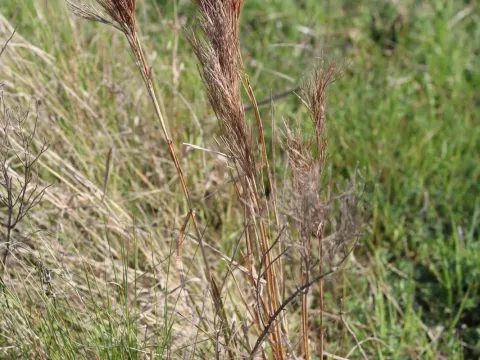
Schizachyrium condensatum
Schizachyrium condensatum
Schizachyrium condensatum is a perennial grass species belonging to the Poaceae family. It is known for its dense growth habit, which provides excellent ground cover in its native tropical and subtropical habitats in the Americas.
What the section contains
Schizachyrium condensatum
The plant is native to regions with high rainfall and is well-adapted to nutrient-poor soils. It is particularly valued for its tolerance to acidic soil conditions where other traditional forage grasses might fail to establish a stable canopy.
Regarding climatic requirements, this species thrives in warm, frost-free environments. Continuous exposure to high sunlight levels is essential for the plant to achieve its maximum biomass production during the active growing season.
Agronomic management involves minimal input requirements, as the plant exhibits an efficient mechanism for nutrient uptake, specifically phosphorus. Maintaining a proper soil pH between 4.5 and 6.0 is usually sufficient for optimal health.
Host plant utilization is primarily focused on pasture management and soil conservation. Due to its rigid leaf structure, it serves as a resilient forage option in extensive grazing systems, effectively mitigating soil erosion in tropical climates.
While robust, the crop can be susceptible to fungal diseases such as rust (Puccinia spp.) when planted in high-density conditions. These pathogens flourish in stagnant air and high humidity, significantly reducing forage quality.
Root-feeding larvae are among the most significant invertebrate threats. These pests can cause localized dieback by disrupting the root structure, especially in the early stages of establishment after sowing or reseeding.
Aphid infestations are also possible during periods of rapid vegetative growth. These insects deplete the plant of essential nutrients and can transmit viral agents that compromise the long-term vigor of the pasture.
Integrated pest management (IPM) strategies, including rotational grazing and scheduled mowing, are effective for maintaining crop health and controlling pest populations naturally.
Proper field maintenance, such as ensuring adequate spacing and promoting good air circulation, remains the most reliable preventative measure against the most common biological threats to this grass species.