
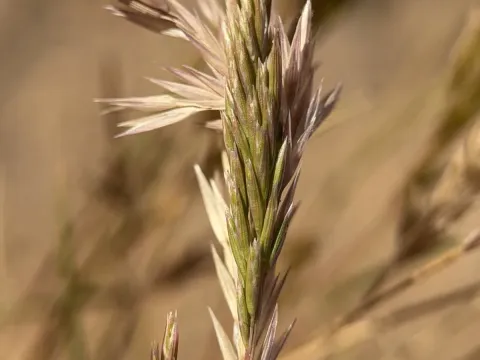
Schismus
Schismus
Schismus is a genus of annual grasses belonging to the Poaceae family. In agricultural practices, sowing is typically timed with the onset of the wet season, as seeds germinate effectively in moderate temperatures.
What the section contains


Schismus
For successful germination, the soil must be well-warmed while retaining sufficient moisture for initial root system development. Using drills for small-seeded crops helps achieve an optimal planting depth, usually not exceeding 1 to 2 centimeters.
Seeding rates vary depending on the intended use; for pasture grazing, density is increased to form a thick stand. In regions with erratic rainfall, sowing is conducted rapidly to take advantage of short-lived precipitation events.
Seedbed preparation involves light harrowing to remove weeds and create an ideal environment for the seeds. Deep plowing should be avoided if overseeding into existing turf to improve pasture composition.
The growth intensity of Schismus seedlings is directly dependent on solar radiation levels and soil nitrogen availability. Under favorable conditions, uniform emergence occurs within 7 to 10 days after planting.
This crop exhibits exceptional resilience to arid conditions and high solar radiation, making it suitable for cultivation in semi-arid zones. Ideal climatic regions include those with Mediterranean climates characterized by mild winters and rainy springs.
The plant is undemanding regarding soil fertility and thrives in poor, sandy, and rocky soils. It possesses the ability to tolerate moderate salinity, positioning it as a promising candidate for the reclamation of degraded lands.
A critical factor for Schismus development is adequate drainage, as the crop is highly sensitive to waterlogging and flooding. It performs best in light, sandy-loam soils with a neutral or slightly alkaline pH.
The growth temperature range extends from 15 to 30 degrees Celsius, though vegetation slows or enters dormancy during extreme summer heat. Moderate humidity during the tillering phase supports the development of a robust plant structure.
In environments subjected to high anthropogenic pressure or overgrazing, Schismus adapts quickly, shifting community dynamics and providing ground cover where other grass species may fail to persist.
The green mass yield of Schismus is modest compared to high-intensity forage crops, yet it remains stable under low-resource conditions. On average, productivity reaches a few centners of dry matter per hectare.
Agricultural use of Schismus is primarily focused on grazing for small ruminants during arid periods. Its value lies in its ability to generate biomass in environments where traditional forage grasses would struggle to survive.
Hay quality from Schismus is characterized by moderate nutritional indicators, often requiring supplemental protein in livestock diets. However, high palatability during early growth phases makes it a valuable component of pasture ecosystems.
To enhance yield, split nitrogen fertilization can be applied, though efficacy in arid regions is limited by water availability. Moderate grazing management is optimal, as it allows plants to set seed and maintain stand longevity.
One of its key traits is the ability to recover rapidly following grazing, provided the root system remains undisturbed by excessive trampling.
Schismus possesses natural resistance to most typical grass diseases due to its fibrous structure and short life cycle. The risk of fungal infections, such as rust or powdery mildew, is minimal in arid climates.
The primary threats to the crop include soil-borne pests, such as wireworms, which may damage the root system at the seedling stage. Mitigation strategies involve standard crop rotation and insecticidal seed treatments.
Under intensive grazing conditions, there is a risk of invasive weed competition if the pasture cover begins to degrade. Proper grazing management is the most effective way to protect the stand.
Pest insect damage is rarely widespread, as the coarse texture of the foliage makes the plant less appealing to many common phytophagous species. Periodic monitoring is recommended during periods of unusual humidity.
Disease prevention is achieved by maintaining optimal stand density, which prevents the creation of a microclimate conducive to mold and fungal pathogen development.