
Sasa veitchii
Sasa veitchii
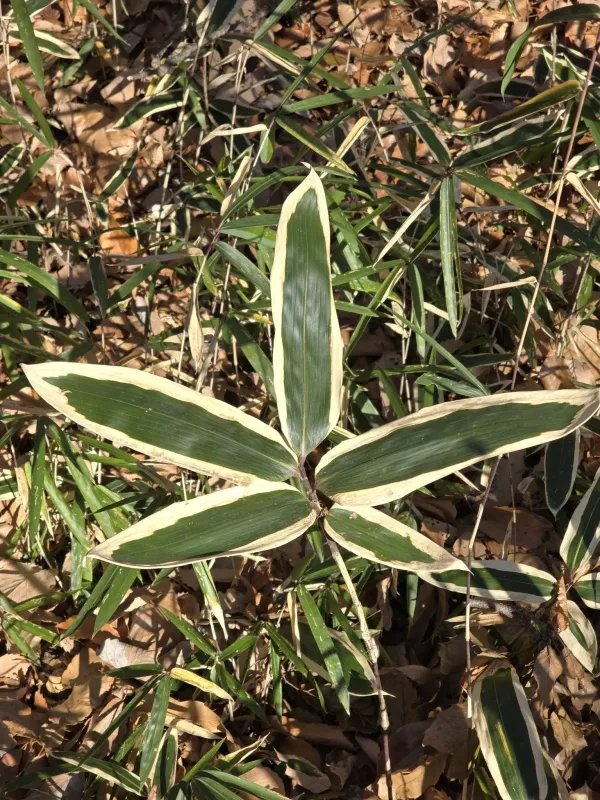
Description
Growing requirements
Sasa veitchii, commonly known as Kuma-zasa, belongs to the Poaceae family. This species is native to Japan and is highly valued for its distinct foliage which turns white at the edges during autumn and winter.
The plant requires well-drained, fertile soil with a slightly acidic to neutral pH. It thrives in locations that provide partial shade, as full midday sun can scorch its delicate leaf margins.
For optimal growth, the species needs consistent moisture levels. While it tolerates various soil types, it performs best in soils rich in organic matter that retain moisture without becoming waterlogged.
Temperature tolerance is a key feature, as Sasa veitchii is hardy in many temperate zones. In colder regions, providing winter mulch is recommended to protect the underground rhizomes from extreme frost.
Regular maintenance involves aggressive pruning of rhizomes if confinement to a specific area is desired. As a spreading bamboo, it is highly efficient at establishing ground cover in woodland settings.
Main diseases and pests
Spider mites are the most significant pests for this bamboo species, particularly during hot and dry weather. Regular misting can help deter mite populations and maintain plant vitality.
Fungal diseases like rust can develop if the foliage remains wet for extended periods in stagnant air. Proper spacing and airflow are essential to keep the leaves dry and healthy.
Powdery mildew may occur when humidity levels are high but ventilation is poor. Early detection and the application of appropriate systemic fungicides are effective ways to manage this issue.
Soil-borne insects, such as grubs, may chew on the rhizome network, weakening the plant. Using organic insecticides or beneficial nematodes can help manage soil pest populations sustainably.
Root rot can result from over-watering or poor soil drainage, leading to yellowing of the foliage. Always ensure the planting site has adequate permeability to prevent anaerobic conditions.