
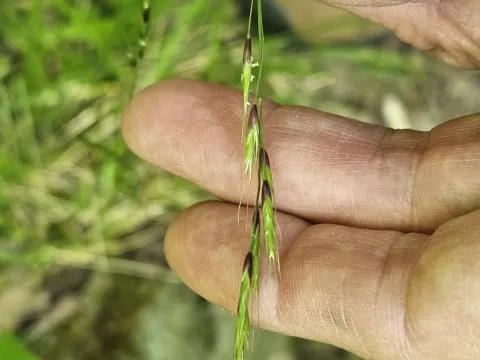
Schizachne
Schizachne
Schizachne, commonly known as false melic, is a genus of perennial grasses belonging to the Poaceae family. While not a conventional intensive agricultural crop, it holds significance as a productive component of wild pastures and natural forage lands.
What the section contains

Schizachne
The plant is native to the temperate regions of the Northern Hemisphere, showing a preference for forest margins, open woodlands, and moist meadows. Its adaptability to partial shade makes it a unique grass species for specific agro-ecological niches.
Botanically, Schizachne is characterized by its loosely tufted growth habit and culms that can grow up to a meter in height. Its inflorescence is a distinct, drooping panicle featuring spikelets with notable awns, which distinguishes it from many common meadow grasses.
It thrives in soils that provide consistent moisture and moderate fertility. Its primary strength lies in its exceptional winter hardiness, allowing it to remain viable in harsh northern climates where other forage species might struggle to survive.
Agricultural usage is mainly directed towards forage production in silvopastoral systems. It is palatable to livestock during the early vegetative stages, providing quality biomass in forest-associated grazing areas.
Like many perennial grasses, Schizachne can be susceptible to fungal pathogens such as rusts and powdery mildew, particularly under conditions of high humidity or poor air circulation.
Insects, including various species of grass flies and aphids, are known to target young leaves and shoots, which can stunt the development of the plant if infestations are severe.
Management of these threats often involves ensuring appropriate stocking densities on pastures and avoiding environments that promote fungal sporulation, such as waterlogged soil.
Regular mowing or grazing management practices are essential to prevent the accumulation of dead plant litter, which serves as a reservoir for pests and fungal diseases.
While generally resilient in wild populations, managed stands require regular monitoring for early signs of disease to maintain the longevity and yield of the grass crop.