
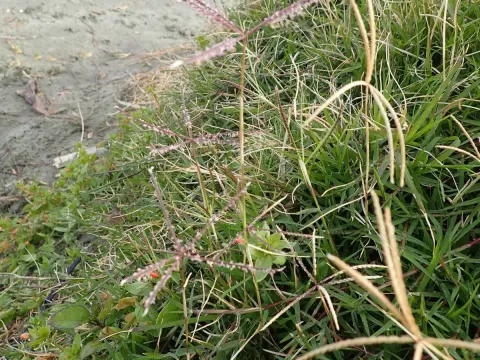
Bermuda grass
Cynodon maritimus
Bermuda grass is a perennial rhizomatous grass species belonging to the Poaceae family. Sowing is typically carried out during the spring months when soil temperatures reach 15 degrees Celsius.
What the section contains
Bermuda grass
Vegetative propagation is widely practiced using rhizome segments or sprigs, which allow for rapid establishment and soil stabilization in arid or coastal regions.
Seed application rates vary depending on the intended use, whether it is for dense forage production or for low-maintenance soil reclamation and erosion control.
Seed placement should be shallow, generally between 1 and 2 centimeters deep, to ensure that the delicate seedlings emerge before exhausting their energy reserves.
Rolling the soil after planting is a critical step to ensure optimal soil-to-seed contact, facilitating consistent moisture absorption required for uniform germination.
This species is highly regarded for its halophytic nature, demonstrating exceptional tolerance to high salinity levels that inhibit the growth of most other crops.
The plant thrives in extreme heat and is characterized by deep, extensive root systems that provide superior drought resistance during prolonged dry seasons.
Bermuda grass is strictly photophilous, requiring full sun exposure to maintain its density; it will inevitably thin out and fail to persist if subjected to shaded environments.
It adapts to a wide variety of soil textures, ranging from sandy soils to heavy clays, provided there is adequate drainage to prevent water stagnation in the root zone.
While tolerant of various soil conditions, it responds positively to balanced nutrient application, particularly nitrogen, which encourages the development of leafy forage.
Forage production potential is largely determined by the management strategy, including the frequency of grazing or harvesting and the availability of water resources.
When used as a pasture crop, its robust recovery rate after defoliation allows for a high stocking rate, making it a reliable source of green matter in hot climates.
The nutritional profile is particularly high during the vegetative stage, providing high-quality protein content for livestock grazing in intensive agricultural systems.
Under optimal management and fertilization, the yield of dry matter can be maximized, ensuring sustained performance over many years of continuous use.
As a long-lived perennial, the stand density often increases over time if managed appropriately, reducing the need for periodic re-seeding and maintenance costs.
Bermuda grass generally exhibits strong natural resistance to major diseases, though specific pathogens like rust or leaf spot may appear under excessive moisture.
Pest management primarily focuses on protecting the crop from subterranean insects or grass-feeding caterpillars that can compromise the plant's root integrity.
Good agronomic practices, such as maintaining appropriate soil moisture levels and avoiding over-fertilization, are the most effective ways to prevent pest outbreaks.
In cases of severe infestation, integrated pest management (IPM) strategies, including the use of targeted biological controls, are recommended to minimize chemical use.
The establishment phase remains the most vulnerable period, where weed competition must be controlled to allow the grass to become the dominant species.
Harvesting for hay should be performed at the beginning of the flowering stage to ensure the highest balance between biomass volume and overall feed quality.
Maintaining a correct cutting height is essential to prevent damage to the lower nodes of the stems, ensuring rapid regrowth for subsequent harvesting cycles.
For seed production, harvesting is timed to capture the seeds just before natural shattering occurs, as mature seeds drop easily from the inflorescence.
Post-harvest processing involves drying the seeds thoroughly to a moisture content of approximately 12 percent, which is critical for long-term storage stability.
Proper cleaning and grading of the harvested seeds remove light debris and empty hulls, ensuring a high-quality product ready for the next planting season.