
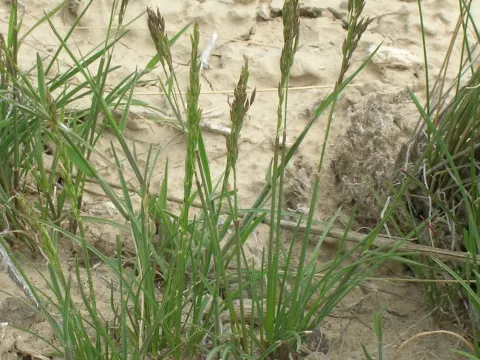
Big bluegrass
Poa ampla
Big bluegrass (Poa ampla) is a perennial, bunch-type grass belonging to the Poaceae family, widely recognized for its adaptability to harsh environments.
What the section contains
Big bluegrass
Sowing is typically performed in early spring or late autumn when soil temperatures are conducive to germination and establishment is most successful.
Proper seedbed preparation is essential; the soil should be firm and moist to ensure that the small seeds have adequate contact with the ground for germination.
Native to the western parts of North America, this species has evolved to thrive in steppe-like conditions, developing a deep and extensive root system.
As a resilient forage crop, it is increasingly used in restoration projects and land reclamation due to its ability to stabilize soil and resist erosion.
This grass species prefers well-drained loamy or sandy soils, though it shows impressive tolerance to various soil types if they are not excessively compacted.
It is highly drought-tolerant, utilizing early-season moisture to grow vigorously before the heat of summer sets in, making it an ideal choice for arid regions.
Adequate sunlight is required for optimal development; plants grown in full sun produce significantly more biomass and exhibit better winter survival rates.
Standard agronomic management includes balanced fertilization, particularly nitrogen application, which helps maintain high forage quality throughout the season.
It is crucial to avoid low-lying fields with standing water or high water tables, as Big bluegrass is sensitive to poor drainage and waterlogged conditions.
The yield of Big bluegrass is highly dependent on management strategies such as grazing intensity and the timing of mechanical harvesting for hay production.
When utilized for pasture, it provides high-quality forage that is well-liked by livestock, offering good nutritional value during the early growth phases.
Proper rotational grazing is vital to ensure that the plants are not overgrazed, which helps preserve root reserves and ensures productivity in subsequent years.
For hay production, cutting at the appropriate maturity level prevents the stems from becoming too fibrous, thus maintaining protein levels for the animals.
Including this species in forage mixtures can enhance the overall productivity of grasslands, balancing nutritional output and increasing seasonal availability.
While generally hardy, Big bluegrass can be susceptible to common fungal diseases like powdery mildew if plant density is too high in humid climates.
Insect pests, such as aphids or grass-feeding flies, can cause damage to foliage during the active growth period, necessitating careful field monitoring.
Integrated pest management, including crop rotation and maintaining healthy plant vigor, is the best defense against major outbreaks of diseases and pests.
Thinning out overly dense stands can improve airflow, effectively reducing the risk of humidity-related fungal issues during the summer months.
Timely harvesting or managed grazing helps keep pest populations under control by disrupting their life cycles within the field.
Harvesting for hay should ideally occur during the boot to early heading stage to capture the highest nutrient concentration before the grass matures.
In grazing scenarios, a rotational schedule allows for a rest period, enabling the plants to recover and sustain growth throughout the grazing season.
Seed harvest requires precise timing; since the seeds mature in clusters, it is important to monitor the color change to avoid excessive shattering in the field.
Proper drying and cleaning of seeds post-harvest are essential to preserve their germination viability for future planting and industrial use.
Adjusting harvesting equipment settings is critical to minimize physical damage to the plant structures and to ensure high-quality material output.