
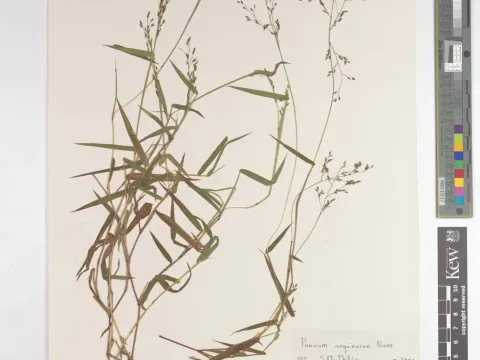
Panicum aequinerve
Panicum aequinerve
Panicum aequinerve belongs to the Poaceae family and is a grass species characterized by its specific venation pattern on the leaves. It thrives in tropical and subtropical climates where heat and light are abundant throughout the growing season.
What the section contains
Panicum aequinerve
The plant requires well-drained soils, ideally of a sandy loam texture, which allows for proper aeration of the root system. Waterlogging is detrimental to the development of this species, as it restricts oxygen exchange in the soil and promotes pathogen activity.
Temperature plays a crucial role in the lifecycle of this crop. It performs best under warm conditions, with an optimal range between 22 and 28 degrees Celsius. Any significant drop in temperature during the early vegetative phase can lead to physiological stunting.
Geographically, the species is native to African regions, showcasing high resilience to variations in rainfall patterns. Its ability to tolerate dry spells makes it a candidate for sustainable agriculture in arid environments.
Host plant utilization is primarily focused on forage and fodder production. Due to its balanced nutrient composition, it is highly valued as a feed source for livestock, providing necessary roughage and minerals for growth and development.
The primary threats to Panicum aequinerve are fungal infections, particularly smut species that target the inflorescences. These pathogens can significantly compromise yield quality and reduce the overall feed value of the harvested biomass.
Insect pests, such as aphids and stem borers, are frequent visitors to these crops. Aphids can cause direct damage by sucking sap and spreading viral infections, which manifest as leaf necrosis and reduced photosynthetic efficiency.
Root rots represent a chronic issue if soil drainage is inadequate. Pathogens like Fusarium or Pythium may attack the root collar, leading to plant collapse and premature death, especially if the crop is not rotated regularly.
Weed infestation during the seedling stage is a critical challenge. Because the initial growth of Panicum aequinerve is relatively slow, it requires clean fields to establish dominance and prevent competition for nutrients and solar radiation.
Integrated Pest Management (IPM) protocols are essential for maintaining crop health. These include crop rotation, the use of resistant genotypes, and the timely application of targeted fungicides to mitigate the risk of epidemics during moist weather.