
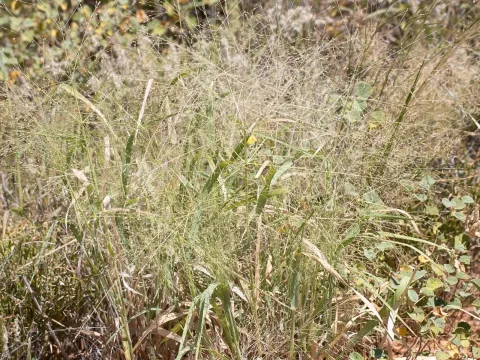
Panicum decompositum
Panicum decompositum
Panicum decompositum, commonly known as native millet, is a perennial grass belonging to the Poaceae family. Its sowing period is traditionally aligned with the onset of the wet season, which provides the necessary moisture for germination and establishment in its native Australian habitat.
What the section contains
Panicum decompositum
Precision in sowing depth is vital, as the seeds are relatively small and need to be placed in contact with moist soil to initiate growth. Mechanical seed drills are recommended to ensure uniform distribution and to achieve the desired planting density for optimal pasture establishment.
Early-season sowing is preferred to ensure that plants have sufficient time to develop a robust root system before the onset of extreme heat or seasonal dry spells. This early establishment significantly increases the resilience of the stand during the subsequent months of active growth.
The culture can be established from broadcast sowing, especially in natural grassland restoration projects, although drilling provides more predictable results for commercial hay or seed production. It is important to monitor soil temperature to ensure it is above the threshold for rapid germination.
Proper field preparation, including the removal of competing vegetation, creates a favorable environment for native millet. Clean seedbeds minimize initial competition, allowing the crop to establish its dominance quickly and effectively within the plot.
This species thrives in well-drained sandy or loamy soils, which are typical for its native arid and semi-arid environments. It is highly sensitive to waterlogging, as anaerobic soil conditions can lead to rapid root decay and plant decline.
As a C4 grass, Panicum decompositum requires high levels of solar radiation for peak photosynthetic efficiency. It is intolerant of prolonged shading, which restricts its growth and reduces the overall yield of both forage and seed mass significantly.
The grass is well-adapted to environments with moderate soil fertility and can survive in nutrient-poor conditions. However, a balanced fertilization program focusing on nitrogen and phosphorus application at the start of the season can substantially boost biomass production.
Temperature tolerance is a hallmark of this species, with an optimal growth range between 25 and 35 degrees Celsius. While it can withstand extreme heat, it is susceptible to damage from frost, which can cause significant stress or kill actively growing tillers.
Soil aeration is critical for its health. High-traffic areas or heavily compacted soils should be avoided or remediated before sowing to ensure proper water infiltration and gas exchange, which are essential for maintaining a high-yielding, long-lived stand.
The biomass yield of native millet is heavily influenced by the seasonal rainfall pattern. In years with adequate soil moisture, the plant is capable of producing significant amounts of forage, which is highly appreciated in livestock farming systems.
Seed yield varies depending on the density of the panicles and the length of the growing season. Successful management includes monitoring the maturity of the grain to optimize harvest timing, as the seeds can be prone to shattering if left too long in the field.
Forage value remains high when harvested before the plant becomes overly fibrous. Nutritional analysis shows that, when managed correctly, the foliage provides a good balance of protein and digestible fibers, contributing to healthy livestock weight gain.
Intensive grazing management is required to maintain the productivity of the stand over several seasons. Overgrazing depletes the plant's energy reserves in the rootstock, leading to reduced regrowth potential and lower overall seasonal yields.
Research into supplemental irrigation shows that even minimal watering during peak growth stages can double the yield of dry matter. This makes the crop an excellent candidate for semi-managed irrigation systems in arid agricultural regions.
The main threats to Panicum decompositum include various fungal diseases that flourish in high-humidity conditions. Rust and leaf spot infections can reduce the photosynthetic area of the leaves, directly impacting the plant's growth rate.
Insect pests, such as grasshoppers and various caterpillar species, can cause substantial damage by consuming foliage or boring into the stalks. Integrated pest management strategies, focusing on biological controls, are preferred to minimize chemical usage.
Seed-eating pests represent a significant threat to harvest yields. Proper storage protocols, including drying the seed to a moisture level below 12 percent and storing in sealed, pest-proof containers, are essential to protect the quality of the harvested product.
Competitive weeds pose a constant threat by vying for moisture and light. Early weeding or the use of selective herbicides, when necessary, is crucial to protect the developing stand from being crowded out by more aggressive opportunistic plant species.
Monitoring for signs of nutrient deficiency or soil-borne diseases is part of a proactive health management plan. Keeping the stand vigorous through appropriate stocking rates or harvest cycles naturally suppresses many common threats to the crop.
Harvesting for grain should be performed when the seeds reach physiological maturity. At this stage, the panicles become firm and the moisture content drops, making them suitable for combining without excessive cracking or loss due to shattering.
For forage production, the optimal timing is just before the flowering phase begins. This ensures that the biomass is rich in nutrients and lacks the lignified, indigestible stem tissue that develops rapidly during the reproductive phase.
Post-harvest handling is critical, as any moisture left in the harvested material can lead to spoilage. Forage must be cured properly in the field or dried using mechanical blowers to ensure a stable shelf life and the absence of toxic mold growth.
When using combine harvesters, machine settings should be calibrated specifically for small-seeded grasses. Adjusting the fan speed and the concave clearance is essential to prevent blowing away the valuable seed while ensuring effective separation.
The aftermath of the harvest, including stalks and stubble, serves as excellent mulch that protects the soil surface from erosion and helps to maintain soil moisture for the regrowth of the crop in the following season.