
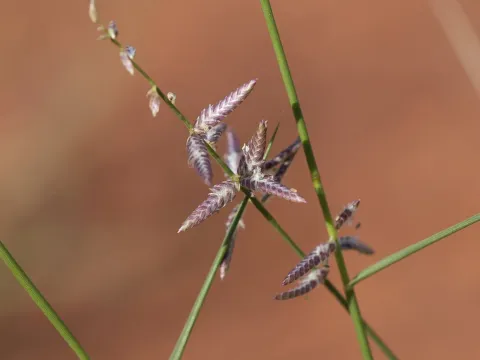
Woolly lovegrass
Eragrostis laniflora
Eragrostis laniflora belongs to the Poaceae family. As a perennial crop, it is sown in spring once soil temperatures reach 12–15 degrees Celsius, which provides optimal conditions for uniform seed germination.
What the section contains
Woolly lovegrass
The seeds are very fine, requiring shallow planting at a depth of 1–2 centimeters. Ensuring proper soil-to-seed contact is critical for successful establishment during the early stages of vegetation.
The seeding rate typically ranges from 6 to 10 kilograms per hectare, depending on seed quality and the intended use of the grassland. Row or cross-seeding methods are recommended for establishing robust stands.
The plant exhibits high tillering capacity, allowing it to form dense sod rapidly under favorable moisture conditions. Initial weed control is essential in the first few weeks to protect young seedlings.
Once established, the crop demonstrates excellent winter hardiness and quick spring regrowth, making it a valuable species for ecological restoration and soil stabilization projects.
This grass thrives in light, well-drained sandy or loamy soils, typical of its native arid habitats. It shows remarkable drought tolerance, which is attributed to its extensive and efficient root system.
Optimal climatic conditions include moderately warm summers with high light intensity. The plant is poorly adapted to waterlogged or flooded conditions, which can lead to significant damage to the roots.
Eragrostis laniflora grows well in soils with a pH ranging from neutral to slightly acidic. It does not require high levels of nitrogen fertilizer, as it is efficient in utilizing available soil nutrients.
In arid environments, this crop acts as a key component of agro-ecosystems, preventing soil erosion by anchoring the ground with its complex network of fine roots.
The limiting factor for productivity is extreme cold during the winter, though the plant is well-adapted to pass through its natural dormant phase within its indigenous range.
Agricultural use is primarily focused on creating long-term pastures. The biomass yield is largely dependent on the grazing regime and the availability of rainfall during the growing season.
The plant is valued for its high nutritional quality in the pre-flowering stage, when protein content in leaves is at its peak. It serves as an excellent source of forage for livestock.
For hay production, yield can be significant if harvesting is timed correctly. Delaying harvest leads to a reduction in forage quality and increased lignification of the stems.
The crop displays good regrowth potential after mowing or grazing, allowing for multiple harvest cycles per season, which enhances its economic efficiency in extensive farming systems.
Integrating this grass into crop rotations contributes to improved soil structure and health, as root residues help in organic matter accumulation and long-term soil fertility maintenance.
Eragrostis laniflora is characterized by high natural resistance to most pathogens affecting common cereals. Risks of rust or smut fungi are minimal under dry air conditions.
Soil-dwelling pests, such as larvae of certain beetles, can pose a threat to young stands. Therefore, monitoring is recommended during the seedling stage in high-risk areas.
Weed competition is the primary challenge for newly established stands. Preventive management of broadleaf weeds is necessary to ensure the crop establishes dominance in the field.
The plant generally does not require intensive pesticide use due to its natural resilience. Good agronomic practices and proper site selection serve as the best defense against potential threats.
Root rot might occur in cases of severe waterlogging and poor drainage, but this is considered atypical and can be prevented by ensuring proper soil conditions before sowing.
Hay harvesting should be conducted at the beginning of the flowering phase to ensure the best balance between biomass volume and the nutritional quality of the fodder.
Effective drying is essential when producing hay. Due to the fine structure of the stems and leaves, the plant loses moisture quickly, allowing for efficient field drying.
For seed production, harvesting must take place as the panicles turn brown but before significant seed shattering occurs. Specialized equipment is needed due to the small size of the seeds.
Rotational grazing is recommended for pastoral use to prevent overgrazing, which helps in maintaining the health and vigor of the root system for future growth.
Modern harvesting machinery allows for minimal losses and ensures the production of high-quality hay that can be stored for long periods without significant loss of nutrients.