
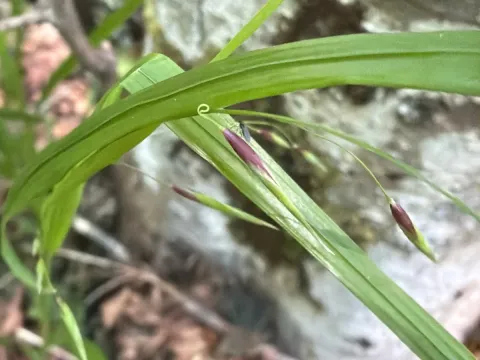
Alaska oniongrass
Melica subulata
Alaska oniongrass (Melica subulata) is a perennial grass species belonging to the Poaceae family. Its native habitat spans the western regions of North America, where it thrives in open forests and well-drained slopes.
What the section contains
Alaska oniongrass
Botanically, the plant is characterized by its slender leaves and a narrow panicle inflorescence. It grows in a bunch-forming habit, which provides excellent soil stabilization properties for mountainous or sloped terrain.
The crop prefers well-drained, fertile soil and is moderately shade-tolerant compared to many other forage grasses. It is highly valued for its ability to persist in diverse environmental conditions without excessive soil amendments.
Regarding climatic needs, Melica subulata requires consistent moisture during the early spring growing phase to maximize biomass production. It shows high resistance to cold and can endure harsh winter conditions typical of high-latitude or high-altitude regions.
Economically, it is utilized primarily for rangeland improvement and erosion control. Its nutritional profile makes it a beneficial component of forage mixes, providing sustained grazing value for livestock and wildlife.
Typical plant health threats include various rust fungi that can infect the foliage during humid seasons. Good field management, including adequate spacing and clearing of plant debris, is essential to mitigate fungal growth.
Pest activity, particularly from aphids and stem-boring insects, can occasionally impact crop health. Integrated pest management (IPM) practices, such as maintaining healthy plant vigor and monitoring fields, are recommended to prevent significant damage.